This covers the week of 10/27/19 - 11/2/19.
departure
I hurry back to give her a second kiss.
depression
One statue with a ripped out torso embodies depression. Mind and body laid to waste.
feasting
At an Uzbek restaurant: salads in small, shallow dishes and a delicious stew that settles comfortably in my stomach for what seems like days.
mealtimes
A rich salmon salad in the morning. Pecan cookies in the afternoon. Some yogurt for dinner.
sculptures
On one outdoor terrace, a sculpted horse considers the ocean and the narrow streets of an old neighborhood. On the rooftop, a real bird with black and white feathers perches on a steampunk-like contraption. Nearby, a statue skulks, its face lost in the shadows of a hood.
staked
The cat peers out from among broad, dusty leaves.
waterfront
By the ocean: scooters, bikes, paper boats strung up in the air, a rippling flag on a rock among the waves.
Showing posts with label travel. Show all posts
Showing posts with label travel. Show all posts
Monday, June 1, 2020
Monday, July 2, 2018
New York City Sites for the Fourth of July (All Five Boroughs)
If you're visiting New York City around the Fourth of July (or want to go armchair traveling), and you're interested in American history, this is the post for you. These sites are either connected to the American Revolution or show something of NYC's colonial period.
This list is limited to sites I have visited (so you won't see a photo from the Prison Ship Martyrs Monument in Fort Greene, for instance). For each site, I also mention other neighborhood attractions. Enjoy!
Stockbridge Indian Memorial (Van Cortlandt Park)
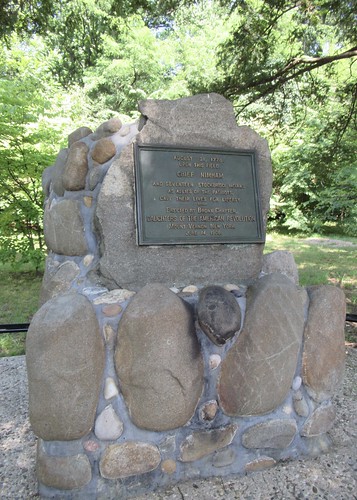
You'll find this memorial in the northeast part of Van Cortlandt Park. It's a tribute to a group of Native Americans, allied with the colonists, who died in August 1778 in a clash with an overwhelmingly larger number of British and Hessian troops. (Here's an article that goes into greater depth about the Stockbridge-Mohican community.)
In the neighborhood: Van Cortlandt Park is massive (one of the city's largest parks) and has golf courses, sports fields, and miles of hiking trails. The Van Cortlandt House Museum on the west side of the park dates from the 18th century, and during the Revolutionary War, both Washington and General William Howe, the commander of the British troops, made use of it. If you're in the area, you can also visit Woodlawn Cemetery, where a variety of historic figures are buried. The cemetery is close to the east side of the park.
This list is limited to sites I have visited (so you won't see a photo from the Prison Ship Martyrs Monument in Fort Greene, for instance). For each site, I also mention other neighborhood attractions. Enjoy!
The Bronx
Stockbridge Indian Memorial (Van Cortlandt Park)
You'll find this memorial in the northeast part of Van Cortlandt Park. It's a tribute to a group of Native Americans, allied with the colonists, who died in August 1778 in a clash with an overwhelmingly larger number of British and Hessian troops. (Here's an article that goes into greater depth about the Stockbridge-Mohican community.)
In the neighborhood: Van Cortlandt Park is massive (one of the city's largest parks) and has golf courses, sports fields, and miles of hiking trails. The Van Cortlandt House Museum on the west side of the park dates from the 18th century, and during the Revolutionary War, both Washington and General William Howe, the commander of the British troops, made use of it. If you're in the area, you can also visit Woodlawn Cemetery, where a variety of historic figures are buried. The cemetery is close to the east side of the park.


Tuesday, October 17, 2017
Halibut Point State Park is Amazing
In early September, I went on a vacation for a few days to Boston and to some of the towns within commuting distance, including Rockport on the Cape Ann Peninsula. The highlight in Rockport was walking from the center of town to Halibut Point State Park.
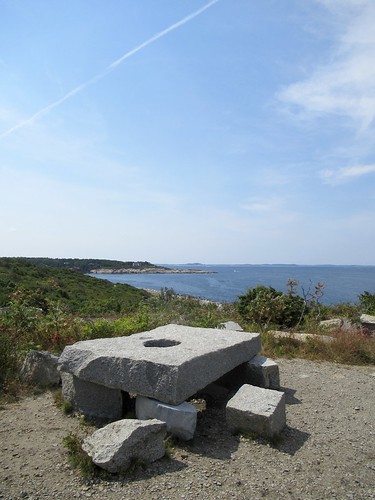
It used to be a granite quarry, and the quarry is full of water now. It's stunning.
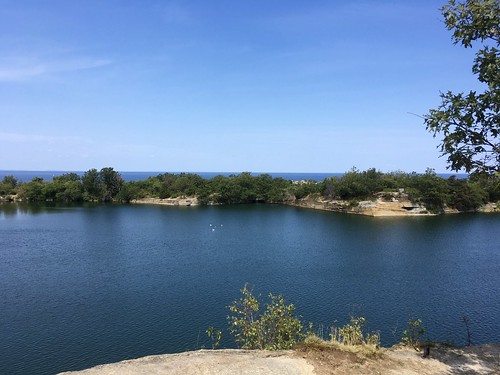
Along with walking around the quarry, you can look out over the ocean.
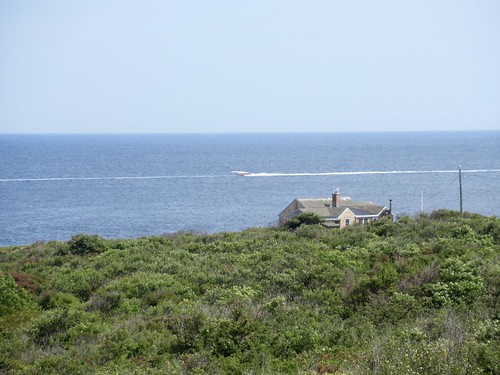
And head down to a beach layered in slabs of rock.
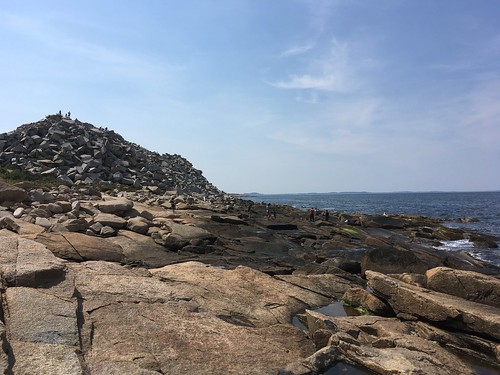
Have a picnic here.
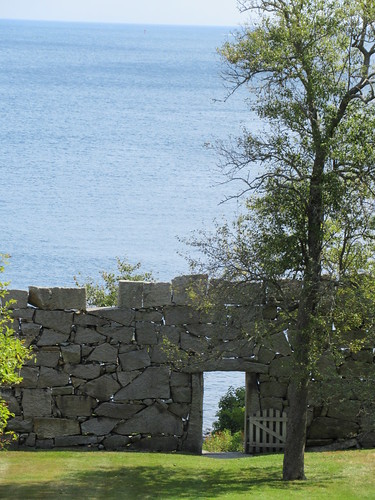
The walk to and from town is also wonderful, with beautiful yards and gardens along the way, and openings to the sea that tease the imagination.
I felt lucky to visit these places.
It used to be a granite quarry, and the quarry is full of water now. It's stunning.
Along with walking around the quarry, you can look out over the ocean.
And head down to a beach layered in slabs of rock.
Have a picnic here.
The walk to and from town is also wonderful, with beautiful yards and gardens along the way, and openings to the sea that tease the imagination.
I felt lucky to visit these places.
Thursday, October 27, 2016
Two film noirs where hitch-hiking goes horribly wrong
Title: Detour (1945)
Director: Edgar G. Ulmer
Language: English
Rating: Unrated
Detour was made on a shoestring budget, which works for its overall mood. A musician, Al Roberts (Tom Neal), hitch-hikes across the US to get to his fiancée in California. She represents the sort of life that a schlimazel and, ultimately, murderer like him will never enjoy. He's not only unlucky, but wallows in his unluckiness, seems to rush out to meet opportunities that will further make him unlucky. One of the best shots is of his face, full of stubble and despair, as he sits in a diner.
The only time he seems to struggle against his character and fate is when he plays piano. The music feels like a protest against his worst impulses.
Most memorable of all is Vera, a woman Al meets on the road. Ann Savage plays Vera as a wildly creepy sexual hellcat, full of rage and bitterness. Her eyes alone promise torment. She could have been one of the Furies in a Greek tragedy. I like how Savage's performance evokes both a particular woman and vengeance incarnate. Al is almost definitely not the worst man Vera has ever had to deal with, but he's there, in her path, ready to embrace unluckiness.
Title: The Hitch-Hiker (1953)
Director: Ida Lupino
Language: English and some Spanish
Rating: Unrated
Two men on a fishing trip pick up a stranded motorist. He's Emmett Myers (William Talman), a psychotic criminal who has escaped from prison. One of his eyes never fully closes, so even when his victims think he might have fallen asleep (and they can maybe make a break for it), they aren't sure if he's watching them.
The filmmakers maintain strong psychological tension throughout the movie. Roy (Edmond O'Brien) and Gilbert (Frank Lovejoy), the fishing trip buddies, know that at some point Emmett will kill them. They just don't know when. (A fact that he torments them with.) Subtle contrasts emerge between them, in how they react to their likely fate, while struggling to stick together, stay sane, and find an opportunity to fight back.
There's an excellent use of music in this film, including some classical music in a scene out in a desert by a well where a killer may be disposed to drop bodies. There's also light Mexican folk music in a moment where Roy and Gilbert may very well die. The suspense is especially strong during one scene involving a long walk on a dock through shadows.
Part of the movie is set in Baja California, and notably it portrays the locals as people, not as caricatures of another culture. Another impression the movie made on me is how it never gets melodramatic. It just lets the tension stretch out, the feelings churn and from time to time erupt.
Director: Edgar G. Ulmer
Language: English
Rating: Unrated
Detour was made on a shoestring budget, which works for its overall mood. A musician, Al Roberts (Tom Neal), hitch-hikes across the US to get to his fiancée in California. She represents the sort of life that a schlimazel and, ultimately, murderer like him will never enjoy. He's not only unlucky, but wallows in his unluckiness, seems to rush out to meet opportunities that will further make him unlucky. One of the best shots is of his face, full of stubble and despair, as he sits in a diner.
The only time he seems to struggle against his character and fate is when he plays piano. The music feels like a protest against his worst impulses.
Most memorable of all is Vera, a woman Al meets on the road. Ann Savage plays Vera as a wildly creepy sexual hellcat, full of rage and bitterness. Her eyes alone promise torment. She could have been one of the Furies in a Greek tragedy. I like how Savage's performance evokes both a particular woman and vengeance incarnate. Al is almost definitely not the worst man Vera has ever had to deal with, but he's there, in her path, ready to embrace unluckiness.
Title: The Hitch-Hiker (1953)
Director: Ida Lupino
Language: English and some Spanish
Rating: Unrated
Two men on a fishing trip pick up a stranded motorist. He's Emmett Myers (William Talman), a psychotic criminal who has escaped from prison. One of his eyes never fully closes, so even when his victims think he might have fallen asleep (and they can maybe make a break for it), they aren't sure if he's watching them.
The filmmakers maintain strong psychological tension throughout the movie. Roy (Edmond O'Brien) and Gilbert (Frank Lovejoy), the fishing trip buddies, know that at some point Emmett will kill them. They just don't know when. (A fact that he torments them with.) Subtle contrasts emerge between them, in how they react to their likely fate, while struggling to stick together, stay sane, and find an opportunity to fight back.
There's an excellent use of music in this film, including some classical music in a scene out in a desert by a well where a killer may be disposed to drop bodies. There's also light Mexican folk music in a moment where Roy and Gilbert may very well die. The suspense is especially strong during one scene involving a long walk on a dock through shadows.
Part of the movie is set in Baja California, and notably it portrays the locals as people, not as caricatures of another culture. Another impression the movie made on me is how it never gets melodramatic. It just lets the tension stretch out, the feelings churn and from time to time erupt.
Wednesday, July 13, 2016
Week in Seven Words #297
bleary
Like a bloodshot eye, the moon flickers faintly red through a film of cloud.
computations
I'm running late to meet with a hiking group in an unfamiliar neighborhood. Based on subway travel time estimations, the group's route, their likelihood of heading out 10-15 minutes late, and the speed at which they'll walk, I guess which subway stop to get off of and wind up only a few minutes out of sync with them.
eased
During our conversation she laughs, and then tells me it's the first time she's laughed all day. It feels good to do that for someone.
graphics
I watch them play a soccer video game with graphics so crisp the players look real. There's also real-time commentary, giving the effect of an actual televised game. It's kind of mind-blowing. From my own childhood I remember a small Mario in profile stomping on mushrooms. A Sega Jurassic Park game had more sophisticated graphics, and it let you play as either Alan Grant or a velociraptor (I enjoyed being the velociraptor). But it hits me now, how much games have changed.
latently
I think about the difficulties of writing a 'weak' main character. Someone struggling with some of life's more basic demands. I don't want the character to become too pathetic or seem too hopeless. I also don't want to hit an unchanging note of defeat for pages on end. There's a challenge in making a character enervated while keeping the story dynamic. And even in the character's weakness, one may see the potential for greater strength developing.
packed
Buildings brimming with activity. The balconies filling up. The windows showing faces, silhouettes, and household clutter.
proselytizing
A homeless man and a monk walk on opposite sides of the street. "I belong to an awesome church," the homeless man calls out. "Join my church." "I like my church," says the monk. The homeless man laughs and says, "My church is for everyone. Your church is part of my church." "No," the monk replies, "my church is the one church for everyone."
Like a bloodshot eye, the moon flickers faintly red through a film of cloud.
computations
I'm running late to meet with a hiking group in an unfamiliar neighborhood. Based on subway travel time estimations, the group's route, their likelihood of heading out 10-15 minutes late, and the speed at which they'll walk, I guess which subway stop to get off of and wind up only a few minutes out of sync with them.
eased
During our conversation she laughs, and then tells me it's the first time she's laughed all day. It feels good to do that for someone.
graphics
I watch them play a soccer video game with graphics so crisp the players look real. There's also real-time commentary, giving the effect of an actual televised game. It's kind of mind-blowing. From my own childhood I remember a small Mario in profile stomping on mushrooms. A Sega Jurassic Park game had more sophisticated graphics, and it let you play as either Alan Grant or a velociraptor (I enjoyed being the velociraptor). But it hits me now, how much games have changed.
latently
I think about the difficulties of writing a 'weak' main character. Someone struggling with some of life's more basic demands. I don't want the character to become too pathetic or seem too hopeless. I also don't want to hit an unchanging note of defeat for pages on end. There's a challenge in making a character enervated while keeping the story dynamic. And even in the character's weakness, one may see the potential for greater strength developing.
packed
Buildings brimming with activity. The balconies filling up. The windows showing faces, silhouettes, and household clutter.
proselytizing
A homeless man and a monk walk on opposite sides of the street. "I belong to an awesome church," the homeless man calls out. "Join my church." "I like my church," says the monk. The homeless man laughs and says, "My church is for everyone. Your church is part of my church." "No," the monk replies, "my church is the one church for everyone."
Friday, May 20, 2016
Week in Seven Words #291
consideration
Most of the time what people need is for someone to hear them out. Not immediately jump in with a solution, or a way to rationalize or explain away a problem. Just someone to sit and listen patiently and with a sincere effort to understand.
flicked
Our conversation doesn't mean much. All it does is swat away the silence that would otherwise creep in between us.
sanguinity
There's little to see by the highway except for thin trees and industrial lots. But the flow of traffic is easy, and the sun is out, so there's a light feeling in me, and the world looks beautiful.
selfhood
I have misgivings about the phrase "the real you." It's built on an idea that there's some private version of you that's real, and the rest of you is relatively fake. The thing is, all of you is "the real you." Your different facets, and the way you modify your behavior in different contexts. People can be charming in one situation and behave monstrously in another; or maybe they behave with kindness across a wide range of situations. Maybe part of "the real you" is a tendency to profess opinions that you don't believe in when you're among people you want to impress, while in other situations you speak more freely. One reason I dislike the phrase "the real you" is that people sometimes use it to distance themselves from parts of their personality they don't want to think about. Or they use it to portray someone in an oversimplified way.
slugging
He pauses the TV and stands beside it to give me a lecture on baseball stats. He explains what each number in each little box means. Maybe he thinks he can convince me to stop being indifferent to baseball. I appreciate his effort to involve me in his interests, and the way he steps into a teaching role with enthusiasm. I still couldn't care less about baseball.
warmup
Having my arm used as an impromptu ballet barre.
welcomed
They made me feel at home. That's the warm, lovely feeling I take with me after visiting them.
Most of the time what people need is for someone to hear them out. Not immediately jump in with a solution, or a way to rationalize or explain away a problem. Just someone to sit and listen patiently and with a sincere effort to understand.
flicked
Our conversation doesn't mean much. All it does is swat away the silence that would otherwise creep in between us.
sanguinity
There's little to see by the highway except for thin trees and industrial lots. But the flow of traffic is easy, and the sun is out, so there's a light feeling in me, and the world looks beautiful.
selfhood
I have misgivings about the phrase "the real you." It's built on an idea that there's some private version of you that's real, and the rest of you is relatively fake. The thing is, all of you is "the real you." Your different facets, and the way you modify your behavior in different contexts. People can be charming in one situation and behave monstrously in another; or maybe they behave with kindness across a wide range of situations. Maybe part of "the real you" is a tendency to profess opinions that you don't believe in when you're among people you want to impress, while in other situations you speak more freely. One reason I dislike the phrase "the real you" is that people sometimes use it to distance themselves from parts of their personality they don't want to think about. Or they use it to portray someone in an oversimplified way.
slugging
He pauses the TV and stands beside it to give me a lecture on baseball stats. He explains what each number in each little box means. Maybe he thinks he can convince me to stop being indifferent to baseball. I appreciate his effort to involve me in his interests, and the way he steps into a teaching role with enthusiasm. I still couldn't care less about baseball.
warmup
Having my arm used as an impromptu ballet barre.
welcomed
They made me feel at home. That's the warm, lovely feeling I take with me after visiting them.
Tuesday, September 8, 2015
The Sheer Prettiness of Provincetown
I recently visited Boston for a few days and made a day trip to Provincetown with a ferry (the Boston Harbor Cruises one). I'd never been to Provincetown (or any other part of Cape Cod), and it was a treat. Even the parts of town that were most blatantly a tourist trap were still lovely.
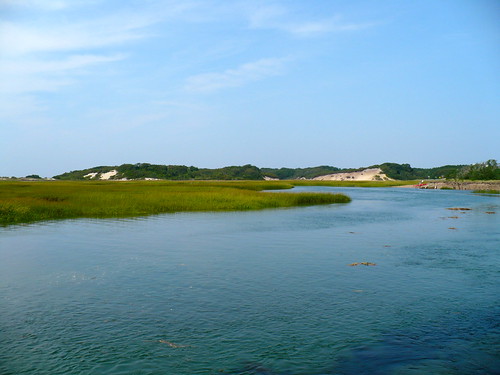
I stuck to Commercial Street, first walking all the way west to where it begins near the spot where the Pilgrims first landed in the 1600s (it wasn't at Plymouth, but Provincetown - they moved on to Plymouth a little later). At the spot historians determined is likely the one where they made their stop, there's a plaque and a small park (Pilgrims' First Landing Park). Off the park, a small beach and a jetty made of large rocks.
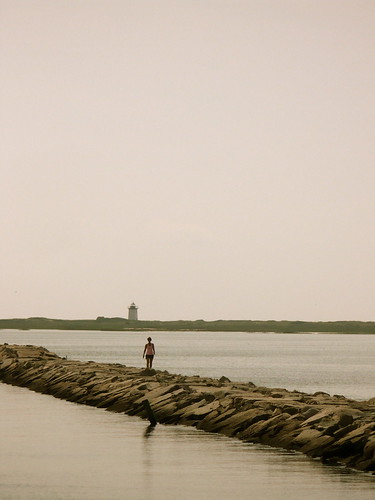
I walked out onto the jetty for a while. I loved listening to the water rushing under the rocks (where I also found some smashed shells, probably from sea gulls dropping them on the rocks to get at the meat inside).
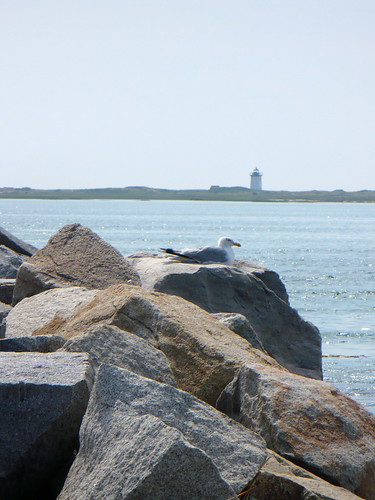
And I loved the smell of the salt marsh all around.
I stuck to Commercial Street, first walking all the way west to where it begins near the spot where the Pilgrims first landed in the 1600s (it wasn't at Plymouth, but Provincetown - they moved on to Plymouth a little later). At the spot historians determined is likely the one where they made their stop, there's a plaque and a small park (Pilgrims' First Landing Park). Off the park, a small beach and a jetty made of large rocks.
I walked out onto the jetty for a while. I loved listening to the water rushing under the rocks (where I also found some smashed shells, probably from sea gulls dropping them on the rocks to get at the meat inside).
And I loved the smell of the salt marsh all around.
Tuesday, April 28, 2015
Israel Trip Highlights (Part 1 of 7): Fauna
Street cat
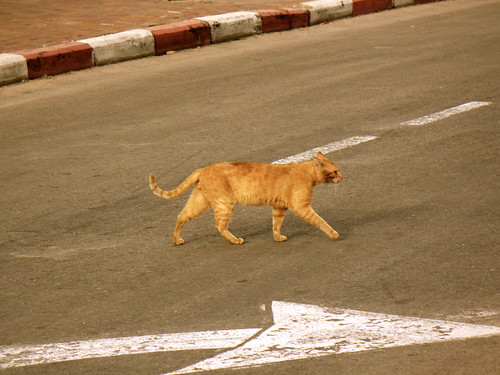
They're everywhere. And they're begging to be the main characters in stories about secret feline societies.
Roadside dog
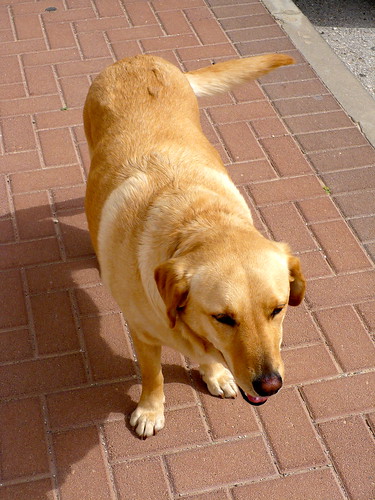
Her name is Luna. She belongs to a food vendor who's stationed in the Judean Desert, en route to the Dead Sea, at the point on the road marked 'sea level.' (You're traveling from the heights of Jerusalem to the Dead Sea, which is the lowest point on Earth - or at least on dry Earth. Reaching sea level is a milestone along the way.)
Luna is used to strangers, and walked over to everyone to get petted and photographed.
They're everywhere. And they're begging to be the main characters in stories about secret feline societies.
Roadside dog
Her name is Luna. She belongs to a food vendor who's stationed in the Judean Desert, en route to the Dead Sea, at the point on the road marked 'sea level.' (You're traveling from the heights of Jerusalem to the Dead Sea, which is the lowest point on Earth - or at least on dry Earth. Reaching sea level is a milestone along the way.)
Luna is used to strangers, and walked over to everyone to get petted and photographed.
Monday, April 27, 2015
Week in Seven Words #253
covert
She's hidden things behind her books - keys to cabinets, necklace pendants, folded letters. She says it's extra protection against casual burglars; they won't rifle through her shelves. But I also suspect it's her romantic streak. She's always wanted the kind of bookcase that would hide a secret, like a door that springs open when you pull out a volume of Donne's poetry.
demolishing
The book I use as a sledgehammer, to smash obstructions in my mind.
ducking
He has always crouched behind a shield. Currently, it's his wife. As long as he's with her, he's protected. No one looks too closely at him.
filling
Strange how the book leaves us both satisfied and empty.
olio
He has in his speech flavors of other countries. He's brimful of anecdotes about bodyguards and bugged hotel rooms, spicy cuisine and off-the-road ruins.
redolence
A begonia in a copper-colored pot, and a cup of orange spice tea.
reversals
Two months earlier, she was fine. Now she has health problems and a career in tailspin through no fault of her own. She speaks in disbelief about her life.
She's hidden things behind her books - keys to cabinets, necklace pendants, folded letters. She says it's extra protection against casual burglars; they won't rifle through her shelves. But I also suspect it's her romantic streak. She's always wanted the kind of bookcase that would hide a secret, like a door that springs open when you pull out a volume of Donne's poetry.
demolishing
The book I use as a sledgehammer, to smash obstructions in my mind.
ducking
He has always crouched behind a shield. Currently, it's his wife. As long as he's with her, he's protected. No one looks too closely at him.
filling
Strange how the book leaves us both satisfied and empty.
olio
He has in his speech flavors of other countries. He's brimful of anecdotes about bodyguards and bugged hotel rooms, spicy cuisine and off-the-road ruins.
redolence
A begonia in a copper-colored pot, and a cup of orange spice tea.
reversals
Two months earlier, she was fine. Now she has health problems and a career in tailspin through no fault of her own. She speaks in disbelief about her life.
Sunday, March 8, 2015
Week in Seven Words #247
assuaged
The restaurant feels impersonal, all the furniture spare and made of metal, but they serve rich comfort food.
barred
When I see the number of missed calls that have accumulated in my cell phone, I'm glad I kept it on 'silent.' Otherwise, I wouldn't have had the morning to myself, to explore as I like.
enchanting
Plum-colored houses with white picket fences. Cobbled lanes and sunken gardens.
gratifying
Tourists licking ice cream in the salt-flavored air.
singular
A lonely giant on a charcoal ledge looks away from the moon.
soaped
Back-to-back episodes of Shark Tank, the TV flickering in a dark room. My mind gently wiped clean of the day's emotions.
tenacious
His wife strikes me as hard and bright, a woman who's difficult to get to know but worth knowing.
The restaurant feels impersonal, all the furniture spare and made of metal, but they serve rich comfort food.
barred
When I see the number of missed calls that have accumulated in my cell phone, I'm glad I kept it on 'silent.' Otherwise, I wouldn't have had the morning to myself, to explore as I like.
enchanting
Plum-colored houses with white picket fences. Cobbled lanes and sunken gardens.
gratifying
Tourists licking ice cream in the salt-flavored air.
singular
A lonely giant on a charcoal ledge looks away from the moon.
soaped
Back-to-back episodes of Shark Tank, the TV flickering in a dark room. My mind gently wiped clean of the day's emotions.
tenacious
His wife strikes me as hard and bright, a woman who's difficult to get to know but worth knowing.
Saturday, December 6, 2014
Half-Day in Boston
From the same trip with the Cambridge morning walk and Salem in 25 photos…
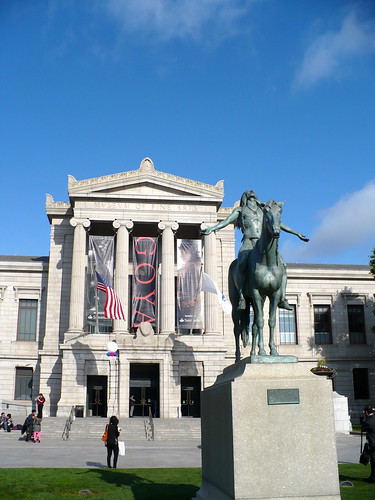
Boston Museum of Fine Arts

Mary Baker Eddy Library
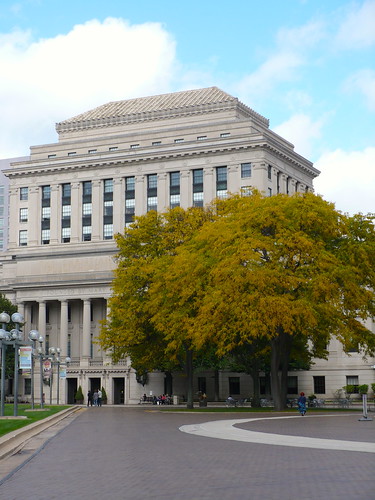

At the library, there's the Mapparium - a huge walk-in glass globe you can stand right in the middle of. The globe dates from the 1930s, so it's a snapshot of the world then. Wasn't allowed to take photos in it, but here's a look from the website.
Boston Museum of Fine Arts
Mary Baker Eddy Library
At the library, there's the Mapparium - a huge walk-in glass globe you can stand right in the middle of. The globe dates from the 1930s, so it's a snapshot of the world then. Wasn't allowed to take photos in it, but here's a look from the website.
Wednesday, October 15, 2014
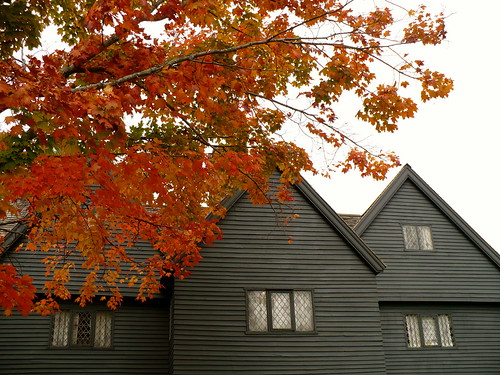
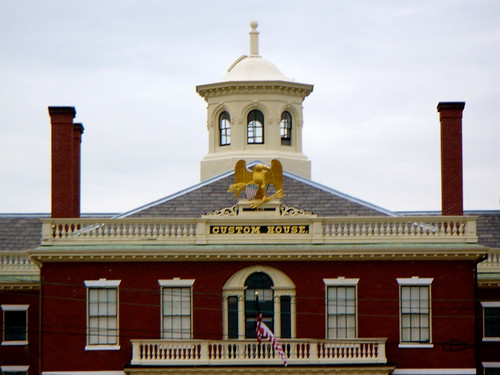
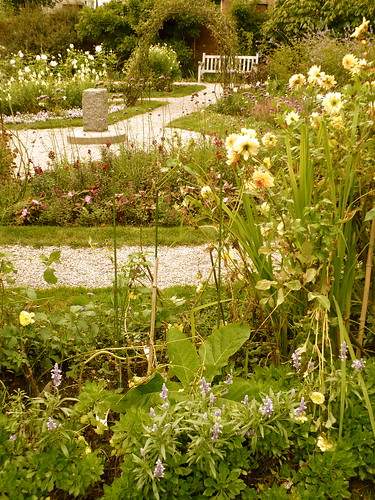
Salem, Massachusetts in October: 25 Photos
(From a half-day visit on Columbus Day.)
The Witch House
The Custom House
Ropes Mansion Garden
The Witch House
The Custom House
Ropes Mansion Garden
Friday, August 22, 2014
Six Short Stories About Different States of Mind
Title: The Balloon of William Fuerst
Author: Lowell B. Komie
Where I Read It: Legal Fictions
A short, funny story but one with a familiar pang in it, the feeling of life getting wasted on triviality. The main character is an attorney who starts to hear air escaping from his ears - "a hiss of all the useless acts." He imagines his head is a balloon, with air leaking out. How does he think he can fix the problem, without leaving a job he feels trapped in? Maybe helium is the answer! If nothing else, at least he'll sound like a new person...
Title: Bitter Grounds
Author: Neil Gaiman
Where I Read It: Fragile Things
Before reading "Bitter Grounds," I hadn't come across any zombie fic that interested me. But this story is further proof that it's never the subject matter that's the problem, but the way it's handled. Any topic can be written about in an interesting way.
This isn't a typical zombie fic. There are no rotting corpses staggering around - no brain-eating, post-apocalyptic monsters. It's more a confusing and fascinating story of escape and loss of identity, of blurred boundaries between people and between the living and the dead. It begins with a man who can't deal with his life anymore:
Author: Lowell B. Komie
Where I Read It: Legal Fictions
A short, funny story but one with a familiar pang in it, the feeling of life getting wasted on triviality. The main character is an attorney who starts to hear air escaping from his ears - "a hiss of all the useless acts." He imagines his head is a balloon, with air leaking out. How does he think he can fix the problem, without leaving a job he feels trapped in? Maybe helium is the answer! If nothing else, at least he'll sound like a new person...
Title: Bitter Grounds
Author: Neil Gaiman
Where I Read It: Fragile Things
Before reading "Bitter Grounds," I hadn't come across any zombie fic that interested me. But this story is further proof that it's never the subject matter that's the problem, but the way it's handled. Any topic can be written about in an interesting way.
This isn't a typical zombie fic. There are no rotting corpses staggering around - no brain-eating, post-apocalyptic monsters. It's more a confusing and fascinating story of escape and loss of identity, of blurred boundaries between people and between the living and the dead. It begins with a man who can't deal with his life anymore:
"In every way that counted, I was dead. Inside somewhere maybe I was screaming and weeping and howling like an animal, but that was another person deep inside, another person who had no access to the face and lips and mouth and head, so on the surface I just shrugged and smiled and kept moving."One day, he drives and just keeps on driving, with no particular destination or purpose. And then starts to move between different identities. Through circumstances described in the story, he steps into the shoes of an anthropology professor invited to give a talk in New Orleans about tales of undead Haitian coffee girls. Nothing in this story is as it seems, and by the end, you have to wonder who is this man, and who has he met along the way? Not sure if this is a nightmare, or if he's ripped through the fragile tissues that life's made of.
Friday, August 9, 2013
Nonfiction Book of the Month: A Lady's Life in the Rocky Mountains

Isabella Bird was an Englishwoman who traveled to remote corners of the world in the second half of the 19th century; she became the first female member of the Royal Geographical Society and wrote extensively about her travels. Unusually, she traveled alone, and in A Lady's Life in the Rocky Mountains, she gives vivid and frank descriptions of life in the Rocky Mountains when they were first being settled; she visited there when she was in her forties.
She roughed it, sleeping in the homes of settlers, in dilapidated cabins, and sometimes outdoors; wherever she went, she worked alongside her hosts, assisting them with their chores. She was an accomplished horsewoman, braving bad weather and spotty trails on horseback, and at several points helping people round up cattle; most of the time she didn't ride sidesaddle, but seated herself as a man would. She wound up befriending a desperado, "Mountain" Jim Nugent, who helped her ascend Long's Peak. All of her writing renders the natural world beautifully, but even when she's in raptures over a particular location (such as Estes Park), there's always a steadiness to her work; you could tell she had sharp eyes and a good head on her shoulders. She comes across a variety of people in the Rockies and on the bordering Plains, and makes an unsentimental analysis of settler society, both the favorable and unfavorable qualities of it.
The book - a compilation of letters she wrote from the Rockies to her sister back in England - is a treat, for its literary and historical value. So dive in and travel alongside her:
There were snow patches, snow slashes, snow abysses, snow forlorn and soiled looking, snow pure and dazzling, snow glistening above the purple robe of pine worn by all the mountains; while away to the east, in limitless breadth, stretched the green-grey of the endless Plains.
Tuesday, September 4, 2012
Why Governor's Island Gave Me a Sci-fi Vibe
Last Sunday, a free ferry from the southern tip of Manhattan took me to Governor's Island.

My initial impression was the following...
My initial impression was the following...
Monday, August 20, 2012
10 great places for reading outdoors in downtown Philly

When I lived in Philly my apartment wasn't in Center City (downtown) but I did walk around a lot there and I can vouch for each of these places as excellent reading spots along with being good outdoor hang-outs; some of them are crowded and lively, while others are quiet and out of the way.
People often raise safety concerns about Philly, but I never felt unsafe in any of the places listed below (mostly because I visited them in the daytime, usually on Sunday afternoons); in any case, use your common sense and listen to your instincts if you feel uncomfortable anywhere.
Sunday, June 17, 2012
Week in Seven Words #123
buskers
Music waits for us at the subway platforms too - xylophone Disney and Broadway melodies, a guitarist smiling through his performance of The House of the Rising Sun.
incredulous
Being menaced by a sword made out of construction paper.
laboriously
The whine and sigh of taxis, cars, and trucks on the street below, muffled by window glass.
multiprocessing
I sit with my laptop outdoors in front of a dark rectangular pool. When looking up from my work I picture images flickering across the pool, as if it's become a computer screen too, full of scrolling text and pop-up ads.
saccharine
I'm reminded of why I don't like most non-fat frozen yogurts. They taste like sharply sweet coldness.
transport
What an unreal day, floating around on buses and trains.
willful
The child objects to the stroller. As he's folded into it he screams that he wants to walk. When his hollering turns into frustrated tears I can't help feeling bad for him.
Music waits for us at the subway platforms too - xylophone Disney and Broadway melodies, a guitarist smiling through his performance of The House of the Rising Sun.
incredulous
Being menaced by a sword made out of construction paper.
laboriously
The whine and sigh of taxis, cars, and trucks on the street below, muffled by window glass.
multiprocessing
I sit with my laptop outdoors in front of a dark rectangular pool. When looking up from my work I picture images flickering across the pool, as if it's become a computer screen too, full of scrolling text and pop-up ads.
saccharine
I'm reminded of why I don't like most non-fat frozen yogurts. They taste like sharply sweet coldness.
transport
What an unreal day, floating around on buses and trains.
willful
The child objects to the stroller. As he's folded into it he screams that he wants to walk. When his hollering turns into frustrated tears I can't help feeling bad for him.
Wednesday, May 2, 2012
Week in Seven Words #117
compressed
Am I really in Israel? More than once I ask myself that. I leave the U.S. on Sunday afternoon, land in Ben-Gurion airport early Monday morning. The funeral is that afternoon, and I spend many hours in my maternal grandma's apartment at the nursing home, where shiva is being held. And then Wednesday night it's time to go back. I see a lot of my family in those few days (grandmothers, uncles, an aunt, cousins, the spouses and children and in-laws of cousins), and it's the first time in years that the members of my immediate family have been in Israel together. As for the country itself, I get glimpses of it. A walk around the lake in the local park among moorhens, geese and hooded crows. Sitting wedged in the back seat of a taxi cab as it loses its way in Tel Aviv traffic. Running through a crowded souk like a video game character who loses points every time she bumps into someone. Eating delicious breakfasts and going out to lunch at a place that serves shish-kebabs and salad platters with hummous, falafels and Moroccan cigars. On Wednesday night fireworks go off; it's the eve of Independence Day. I catch some of the fireworks from the backseat of the cab that drives us to the airport.
filaments
The plane flies over the northern coast of Spain, all dark at night except for strings and clumps of golden light, shaped like cobwebs, snowflakes and amoebas.
funeral
At the funeral for my maternal grandpa, Saba Yossef (Grandpa Joseph) of blessed memory, whom I wrote about in the previous post, there's an atmosphere of sorrow and reunion as people arrive - many of them I don't know, others remember me when I was three feet tall (I don't remember them), and some I know well but haven't seen for years. Here they all are, mingling outdoors, waiting for my grandpa's body to arrive. The Israeli cemetery looks like a desert, full of stone, bright dirt, cacti and flowering shrubs, strange birds crying out from a handful of trees. The main part of the service is held indoors, my grandpa's body wrapped in a shroud and laid out in the center of a cool dim room. I know it's his body, but at the same time it's difficult to accept that it's really him. It doesn't seem like him; it's only his fragile shell. Where he lies in the middle of the room as a shrouded figure there's emptiness. His presence is felt not in this emptiness but in the surrounding people - in the thoughts they have of him, their prayers, their love, their words of remembrance, their grief, the fact that they're all there. The Hebrew word for funeral is "halvayah"(הלוויה), which at the root of it means "accompaniment." Some of his relatives and family friends carry his body out of the room on a pallet and take him outdoors into the cemetery, and everyone else goes with them, accompanying him on a long walk to where his grave is waiting. There's some recitation of lines from psalms and some more quiet reminiscences. When everyone arrives at his grave his body is lowered in, still in its shroud; there's some sort of receptacle at the bottom (I can't see it clearly), which is then covered by stone slabs. After that the grave is filled in, mostly by one of the men from the burial society, but also by family and friends who take turns shoveling in some dirt. Then everyone walks by, placing small stones on the grave. We stare and stare at this mound of earth dotted with many stones.
granddads
A visit to the grave of my paternal grandpa, Saba David (Grandpa David) of blessed memory, who passed away in 2005. Like my maternal grandpa, he died of an infection - in the very same hospital - after living the last few years of his life in a poor state of mental and physical health. Like my maternal grandpa, he was a fighter. He was a war veteran. He also survived the Holocaust (his tombstone bears the names of close family members who didn't). As a very young child he survived smallpox, after the doctors told his mother that he was a lost cause. Luckily for us, she kept taking care of him.
shiva (שבעה)
While sitting shiva, mourners are not meant to be left alone to brood, to sink too deep into grief. Visitors come bringing comfort, conversation, inappropriate funny jokes, and food. Some of them also bring small children who distract and delight with their antics. It's all a mix: tears, laughter, religious musings, mundane conversation, reminiscences, an airing of personal troubles, and silence.
standstill
On Yom Hazikaron - The Day of Remembrance, Israel's Memorial Day - a nationwide siren sounds twice: a minute-long siren in the evening, and a two-minute siren in the late morning. It's a haunting mournful sound, fitting for a day honoring fallen soldiers and victims of terrorism attacks. When it starts up, playing all over the country, everyone stops what they're doing and stands in silence. Cars and motorbikes stop in the middle of the road; the drivers get up and out and stand beside their vehicles. For those three minutes day-to-day life comes to a halt.
whispered
A heart-to-heart with my maternal grandma, who is used to taking care of everyone else and needs time to sit and talk and consider herself too.
Am I really in Israel? More than once I ask myself that. I leave the U.S. on Sunday afternoon, land in Ben-Gurion airport early Monday morning. The funeral is that afternoon, and I spend many hours in my maternal grandma's apartment at the nursing home, where shiva is being held. And then Wednesday night it's time to go back. I see a lot of my family in those few days (grandmothers, uncles, an aunt, cousins, the spouses and children and in-laws of cousins), and it's the first time in years that the members of my immediate family have been in Israel together. As for the country itself, I get glimpses of it. A walk around the lake in the local park among moorhens, geese and hooded crows. Sitting wedged in the back seat of a taxi cab as it loses its way in Tel Aviv traffic. Running through a crowded souk like a video game character who loses points every time she bumps into someone. Eating delicious breakfasts and going out to lunch at a place that serves shish-kebabs and salad platters with hummous, falafels and Moroccan cigars. On Wednesday night fireworks go off; it's the eve of Independence Day. I catch some of the fireworks from the backseat of the cab that drives us to the airport.
filaments
The plane flies over the northern coast of Spain, all dark at night except for strings and clumps of golden light, shaped like cobwebs, snowflakes and amoebas.
funeral
At the funeral for my maternal grandpa, Saba Yossef (Grandpa Joseph) of blessed memory, whom I wrote about in the previous post, there's an atmosphere of sorrow and reunion as people arrive - many of them I don't know, others remember me when I was three feet tall (I don't remember them), and some I know well but haven't seen for years. Here they all are, mingling outdoors, waiting for my grandpa's body to arrive. The Israeli cemetery looks like a desert, full of stone, bright dirt, cacti and flowering shrubs, strange birds crying out from a handful of trees. The main part of the service is held indoors, my grandpa's body wrapped in a shroud and laid out in the center of a cool dim room. I know it's his body, but at the same time it's difficult to accept that it's really him. It doesn't seem like him; it's only his fragile shell. Where he lies in the middle of the room as a shrouded figure there's emptiness. His presence is felt not in this emptiness but in the surrounding people - in the thoughts they have of him, their prayers, their love, their words of remembrance, their grief, the fact that they're all there. The Hebrew word for funeral is "halvayah"(הלוויה), which at the root of it means "accompaniment." Some of his relatives and family friends carry his body out of the room on a pallet and take him outdoors into the cemetery, and everyone else goes with them, accompanying him on a long walk to where his grave is waiting. There's some recitation of lines from psalms and some more quiet reminiscences. When everyone arrives at his grave his body is lowered in, still in its shroud; there's some sort of receptacle at the bottom (I can't see it clearly), which is then covered by stone slabs. After that the grave is filled in, mostly by one of the men from the burial society, but also by family and friends who take turns shoveling in some dirt. Then everyone walks by, placing small stones on the grave. We stare and stare at this mound of earth dotted with many stones.
granddads
A visit to the grave of my paternal grandpa, Saba David (Grandpa David) of blessed memory, who passed away in 2005. Like my maternal grandpa, he died of an infection - in the very same hospital - after living the last few years of his life in a poor state of mental and physical health. Like my maternal grandpa, he was a fighter. He was a war veteran. He also survived the Holocaust (his tombstone bears the names of close family members who didn't). As a very young child he survived smallpox, after the doctors told his mother that he was a lost cause. Luckily for us, she kept taking care of him.
shiva (שבעה)
While sitting shiva, mourners are not meant to be left alone to brood, to sink too deep into grief. Visitors come bringing comfort, conversation, inappropriate funny jokes, and food. Some of them also bring small children who distract and delight with their antics. It's all a mix: tears, laughter, religious musings, mundane conversation, reminiscences, an airing of personal troubles, and silence.
standstill
On Yom Hazikaron - The Day of Remembrance, Israel's Memorial Day - a nationwide siren sounds twice: a minute-long siren in the evening, and a two-minute siren in the late morning. It's a haunting mournful sound, fitting for a day honoring fallen soldiers and victims of terrorism attacks. When it starts up, playing all over the country, everyone stops what they're doing and stands in silence. Cars and motorbikes stop in the middle of the road; the drivers get up and out and stand beside their vehicles. For those three minutes day-to-day life comes to a halt.
whispered
A heart-to-heart with my maternal grandma, who is used to taking care of everyone else and needs time to sit and talk and consider herself too.
Week in Seven Words #116
bereavement
It was a shock to hear that my maternal grandpa, Saba Yossef (Grandpa Joseph), passed away. In the past few years his condition had been slowly deteriorating, and he spent the last five months of his life in a hospital, fighting one infection after another (he contracted these infections courtesy of the hospital itself, where powerful bacteria are rampant and patient care is uneven, to say the least). But still, he was a fighter. This is a guy who evaded the Nazis when he was 12. He was a war veteran. He fought off colon cancer a decade ago. We kept expecting him to live somehow.
concoct
He liked to make simple, fresh dishes with few ingredients. Salads and side dishes. Though he wasn't a consummate chef like his wife, he was good at putting together quick meals, and his niche in the kitchen was usually one corner of the countertop where he'd stand chopping and sprinkling things and making use of whatever he'd found in the back of the fridge or the cupboard.
eloquence
He also had a way with words, composing blessings, articles, essays, and poems. He spoke well, loved good conversation and swapping jokes. He was even eloquent in his sleep. He could nod off a little in front of the nightly news and start arguing with the newscaster (and he'd stir awake if you tried to change the channel). Though he had strong opinions he wasn't a preachy or rigid person; he liked to be on good terms with people and help them out. Discussions held in a relaxed atmosphere and helped along by good food and drink were much more his style than shouting matches.
expected
Another memory of him is from a trip I took to Italy when I was sixteen with various family members including him. At one point we were in Siena during The Palio, the famous horse race that turns the city into a madhouse, and we'd split up into smaller groups for the afternoon. A few hours later, when we'd regrouped, we realized he hadn't joined us. No one knew where he was. Everyone else in my family immediately became worried or outright frantic - what if he'd gotten lost or attacked or had sat down and dozed off somewhere? - and off they went searching for him. I stayed behind to keep watch at the spot where we'd all agreed to meet, in case he came along. And I remember standing there calmly, not worried at all, thinking to myself that at any moment he was going to come down that street, smiling and relaxed, and wonder what all the fuss was about. And that's exactly what happened. He suddenly appeared, strolling along the street, his smile a trifle sheepish and apologetic, and immediately set about deflecting criticism, soothing worries, and trying to coax people into laughing. I'm not sure what happened - it's very likely he had sat down for a spell and dozed off - but it didn't matter. No worries.
golden
The last time I saw him functioning well and full of life was in spring 2006, when he visited the US with my grandma. One highlight of the visit was taking a walk with him in Central Park. Before leaving for the walk I was asked to look after him, to make sure he didn't fall (he'd fallen a few times before, from what we came to realize were most likely mini-strokes that had made him 'blank' for a moment). He chuckled at the suggestion that anyone needed to look after him; he was good-humored, independent, and wasn't prone to worrying. We had a very good walk that day. We went at a brisk pace up and down twisty paths in the Ramble, and by the lake too. We talked about many things, from world affairs to guys to places we wanted to see. It was just the two of us for those few hours.
musicality
His laughter was gleeful. He also had a beautiful voice and liked to sing and hum at every good opportunity - at the dinner table or during a game of rummy or as he walked. For the past few years, living in the aftermath of a series of strokes, he could barely talk; his voice, when he could talk, was hoarse and flat. He didn't laugh either. But to the end he loved music, was moved deeply by it.
open-eyed
He found something of interest everywhere he went. To him there weren't boring places. When he visited us in the suburbs for instance he'd go exploring by bus or train or foot and visit places we'd dismissed as uninteresting. When I was a kid I used to think of it as one of his endearing quirks, but in recent years I've come to respect this approach, this attitude of always seeing the world through fresh eyes and not letting yourself become jaded. I liked going places with him, whether it was to listen to a concert or hop on a paddle-boat or just walk through a park, in part because he was very much interested in the world. He was alive to it.
It was a shock to hear that my maternal grandpa, Saba Yossef (Grandpa Joseph), passed away. In the past few years his condition had been slowly deteriorating, and he spent the last five months of his life in a hospital, fighting one infection after another (he contracted these infections courtesy of the hospital itself, where powerful bacteria are rampant and patient care is uneven, to say the least). But still, he was a fighter. This is a guy who evaded the Nazis when he was 12. He was a war veteran. He fought off colon cancer a decade ago. We kept expecting him to live somehow.
concoct
He liked to make simple, fresh dishes with few ingredients. Salads and side dishes. Though he wasn't a consummate chef like his wife, he was good at putting together quick meals, and his niche in the kitchen was usually one corner of the countertop where he'd stand chopping and sprinkling things and making use of whatever he'd found in the back of the fridge or the cupboard.
eloquence
He also had a way with words, composing blessings, articles, essays, and poems. He spoke well, loved good conversation and swapping jokes. He was even eloquent in his sleep. He could nod off a little in front of the nightly news and start arguing with the newscaster (and he'd stir awake if you tried to change the channel). Though he had strong opinions he wasn't a preachy or rigid person; he liked to be on good terms with people and help them out. Discussions held in a relaxed atmosphere and helped along by good food and drink were much more his style than shouting matches.
expected
Another memory of him is from a trip I took to Italy when I was sixteen with various family members including him. At one point we were in Siena during The Palio, the famous horse race that turns the city into a madhouse, and we'd split up into smaller groups for the afternoon. A few hours later, when we'd regrouped, we realized he hadn't joined us. No one knew where he was. Everyone else in my family immediately became worried or outright frantic - what if he'd gotten lost or attacked or had sat down and dozed off somewhere? - and off they went searching for him. I stayed behind to keep watch at the spot where we'd all agreed to meet, in case he came along. And I remember standing there calmly, not worried at all, thinking to myself that at any moment he was going to come down that street, smiling and relaxed, and wonder what all the fuss was about. And that's exactly what happened. He suddenly appeared, strolling along the street, his smile a trifle sheepish and apologetic, and immediately set about deflecting criticism, soothing worries, and trying to coax people into laughing. I'm not sure what happened - it's very likely he had sat down for a spell and dozed off - but it didn't matter. No worries.
golden
The last time I saw him functioning well and full of life was in spring 2006, when he visited the US with my grandma. One highlight of the visit was taking a walk with him in Central Park. Before leaving for the walk I was asked to look after him, to make sure he didn't fall (he'd fallen a few times before, from what we came to realize were most likely mini-strokes that had made him 'blank' for a moment). He chuckled at the suggestion that anyone needed to look after him; he was good-humored, independent, and wasn't prone to worrying. We had a very good walk that day. We went at a brisk pace up and down twisty paths in the Ramble, and by the lake too. We talked about many things, from world affairs to guys to places we wanted to see. It was just the two of us for those few hours.
musicality
His laughter was gleeful. He also had a beautiful voice and liked to sing and hum at every good opportunity - at the dinner table or during a game of rummy or as he walked. For the past few years, living in the aftermath of a series of strokes, he could barely talk; his voice, when he could talk, was hoarse and flat. He didn't laugh either. But to the end he loved music, was moved deeply by it.
open-eyed
He found something of interest everywhere he went. To him there weren't boring places. When he visited us in the suburbs for instance he'd go exploring by bus or train or foot and visit places we'd dismissed as uninteresting. When I was a kid I used to think of it as one of his endearing quirks, but in recent years I've come to respect this approach, this attitude of always seeing the world through fresh eyes and not letting yourself become jaded. I liked going places with him, whether it was to listen to a concert or hop on a paddle-boat or just walk through a park, in part because he was very much interested in the world. He was alive to it.
Sunday, February 19, 2012
Ten questions
Over at the bookworm blog there are ten questions posed to any reader who wants to answer them.
1. What's your favorite book to film adaptation?
These days, the 1995 version of Persuasion with Amanda Root and Ciaran Hinds, adapted from the Jane Austen novel. (In my thinking here, I'm not including movies that have overshadowed the books they're based on.)
2. What's the last book you read?
Bird by Bird by Ann Lamott. I recommend it, especially if you're struggling, stuck or starting out in writing (come to think of it, when do writers not struggle?). Or read it if you want to laugh; it's both funny and painful. In fact there are many good lessons in it even for people who aren't writers.
3. Describe yourself using just one word.
Wondering.
4. Juice or Soda?
Juice.
5. Do you have any pets?
Not recently. I used to have pet frogs, newts, and fish as a kid. But some people dear to me have just brought a puppy into their home, so I expect I'll be seeing her often and she'll be sort of like a pet to me too. Except I'm not the one paper-training her right now, thankfully.
6. Who is your hero?
At the moment it's Marie Curie: brilliant scientist, innovator, humanitarian, and teacher, and also a wife and mother. She broke ground in many ways, both for humanity as a whole and for women. She was the first scientist to win two Nobel prizes in different disciplines.
7. Give me some blogging advice.
Off the top of my head I can't think of any suggestions; I like your blog as it is. Maybe for people in general - have fun with your blog, instead of seeing it as a ball-and-chain that's dragging you down. If it is, rethink things and change it, or give yourself a break from blogging. It shouldn't bring you misery.
8. When was the last time you laughed out loud?
This morning.
9. If you could travel to any place in the world, where would it be?
I'd like to travel around the US for a few months, do a cross-country trip.
10. If you could meet any author, dead or living, who would it be?
What would you ask them?
George Eliot. I'd want to discuss her books with her, mostly Middlemarch, and hear her thoughts on them.
Edit: Just changed the blog title to reflect the fact that there are ten questions, and that I can in fact count.
1. What's your favorite book to film adaptation?
These days, the 1995 version of Persuasion with Amanda Root and Ciaran Hinds, adapted from the Jane Austen novel. (In my thinking here, I'm not including movies that have overshadowed the books they're based on.)
2. What's the last book you read?
Bird by Bird by Ann Lamott. I recommend it, especially if you're struggling, stuck or starting out in writing (come to think of it, when do writers not struggle?). Or read it if you want to laugh; it's both funny and painful. In fact there are many good lessons in it even for people who aren't writers.
3. Describe yourself using just one word.
Wondering.
4. Juice or Soda?
Juice.
5. Do you have any pets?
Not recently. I used to have pet frogs, newts, and fish as a kid. But some people dear to me have just brought a puppy into their home, so I expect I'll be seeing her often and she'll be sort of like a pet to me too. Except I'm not the one paper-training her right now, thankfully.
6. Who is your hero?
At the moment it's Marie Curie: brilliant scientist, innovator, humanitarian, and teacher, and also a wife and mother. She broke ground in many ways, both for humanity as a whole and for women. She was the first scientist to win two Nobel prizes in different disciplines.
7. Give me some blogging advice.
Off the top of my head I can't think of any suggestions; I like your blog as it is. Maybe for people in general - have fun with your blog, instead of seeing it as a ball-and-chain that's dragging you down. If it is, rethink things and change it, or give yourself a break from blogging. It shouldn't bring you misery.
8. When was the last time you laughed out loud?
This morning.
9. If you could travel to any place in the world, where would it be?
I'd like to travel around the US for a few months, do a cross-country trip.
10. If you could meet any author, dead or living, who would it be?
What would you ask them?
George Eliot. I'd want to discuss her books with her, mostly Middlemarch, and hear her thoughts on them.
Edit: Just changed the blog title to reflect the fact that there are ten questions, and that I can in fact count.
Subscribe to:
Posts (Atom)