Showing posts with label American history. Show all posts

Thursday, September 23, 2021

Week in Seven Words #553

This covers the week of 8/23/20 - 8/29/20.

derange
The man moves like a jumping electric wire. He's tormented to the roots of himself. Staggering up and down the street, he raves about how the industry used to want differences but now wants sameness. Homogeneity in opinions, looks, and creative ideas. I don't know which industry he's talking about. His description fits more than one. In his creased suit, and with his briefcase swinging and shuddering, he belongs to no workplace now.

layers
I've walked down this street a bunch of times without knowing that its name alludes to three activists from the Civil Rights Movement who were killed while helping register black voters in the South.

resting
I stay in bed later than usual, grateful for several hours of uninterrupted sleep.

solidarity
An old man whispers to the young man working at the pharmacy, "You're at this job to land rich widows." When the young man splutters, the old one says, "No shame in that."

splashing
Sparrows in an ecstasy of puddles.

sprinkle
Rain nips at us at the end of our walk, a drizzle after all the breathless warnings about a major storm.

trapped
She chides me for eating too much chocolate. Then she offers me chocolate.

Saturday, April 25, 2020

Week in Seven Words #505

This covers the week of 9/22/19 - 9/28/19.

cramps
Curled up on the couch with intense cramping, waiting for the OTC painkiller to kick in. My feet swivel in time to the pulses of pain, and I try to let the murder mystery novel I'm reading distract me.

curiosity
She shows an interest in Revolutionary-era Boston, after I show her an image of Samuel Adams beer.

drub
In the back room of the board game cafe, the wall is scuffed and dented. A small sign hangs on it, asking customers not to kick it or bang on it with their fists.

hoard
I find a notebook for her, in light blue and decorated with hot air balloons, in which she'll probably want to write the poems and song lyrics she isn't yet ready to share with anyone.

tidying
I clean my shoes and donate some boots, towels, and pillow cases. Under the couch, I find dust clumps that look like small gray wigs.

unquiet
She's trying to find a chair, or configuration of chairs, that will suit her. She slides from one to the other. She chooses a middle seat, before scrambling back to settle against the wall. I don't think she'll find anything she likes, because the discomfort is embedded in her mind. She can't uproot it by means of rearranging chairs.

unthinking
She's frustrated that they don't consider a cold to be an illness. They take no care to cover their mouths when they cough or sneeze.

Sunday, March 22, 2020

Two Movies to Watch With Your Kids

More people are staying home these days, and some family-friendly entertainment may be what you're looking for. (Or maybe these movies will drive you nuts, and you'll let your kids watch them if they want while you hole up in another room to get some work done.)

Title: Annie (2014)
Director: Will Gluck
Language: English
Rating: PG


You would think by reading some of the reviews for this film that it's a horror show, that it will make you want to claw your eyes out and stuff your ears with cotton balls, but what I found was something different.

- The lead actress, Quvenzhané Wallis, approaches her role in a lovely way. She plays a quick-thinking sweetheart of a girl who powers through life with optimism and charm, and her performance doesn't feel forced.

- Jamie Foxx's performance is pretty funny and, at times, genuinely moving. He plays an out-of-touch billionaire running for NYC mayor who tries to boost his performance in the polls by throwing money at everything – sound familiar? – and he does it well.

- There are tongue-in-cheek moments and self-awareness in the film. Even though some scenes are played in earnest, other times the movie nods to its own ridiculousness and lets in some sly humor. There's a scene poking fun at Twilight types of movies, an acknowledgement of how little privacy people have in the age of smart technologies and social media, a look at the corrupt strategies a political campaign will resort to, and some fun with the conventions of a filmed musical (how can someone succeed at being mayor if they're dancing and singing so much?). As an adult, you can watch this movie with kids and still find enough humor in it yourself. It doesn't take itself so seriously, though it does touch on some serious issues (like, it's all well and good to sing about how everyone has a shot at success, but what do you do about poor education or parental neglect?).

- The movie is sentimental, but I didn't find it so cloying – first off because of its self-awareness, and secondly, because I accepted the rules of this fictional universe, where a poor kid will get adopted by a billionaire whose basic decency has been buried under money and workaholic habits. The performances from the main actors and supporting cast work pretty well too, balancing earnestness with an awareness that this is a fun bit of entertainment. (Among the supporting actors, Rose Byrne plays an especially sweet character.)

- Are the musical numbers powerful? I don't think they're breathtaking, but they're still engaging, and the actors hit some of the right acting notes during each (even if the singing isn't mind-blowing).

- I enjoyed some of the footage from around NYC (shout out to the 125th street stop of the 1 train!)

I think some of the people who gave it awful reviews loved the 1980s Annie, which I might have watched as a kid but don't remember. If you're a fan of that one, you may approach this one with mistrust and distaste, and you maybe won't allow yourself to enjoy any of it. I can't help that. All I can do is recommend 2014 Annie for people in search of a reliably entertaining family-friendly musical.

Title: Kit Kittredge: An American Girl (2008)
Director: Patricia Rozema
Language: English
Rating: G


A movie based on an American Girl doll? Yes, and it's entertaining, with enough to enjoy even if you're an adult. Set in Cincinnati during the Great Depression, the movie features Kit (Abigail Breslin), who dreams of becoming a reporter. When her dad loses his job and heads to Chicago to find work, her mom turns their home into a boarding house and takes in lodgers for money.

Kit winds up experiencing some of the struggles of the Depression, writes about what she sees, and identifies the real criminals behind a series of thefts while preventing someone innocent from being arrested. Along with its clever and cute scenes, the movie shows some of the harsh realities of poverty as well as efforts people made to get by and help each other.

The villains wind up being a bit Scooby Doo-ish in their final act, where they're thwarted by those meddling kids. And there's a schmaltz overload at the end. But it's still a decent movie with good work from the child actors and an array of well-cast actors among the adults. The standouts are Julia Ormond, who gives an affecting performance as Kit's mom, and Wallace Shawn, who plays a cantankerous newspaper editor. Also, Colin Mochrie from Whose Line Is It Anyway has a small role as a hobo.

Additional suggestions:
Check out the movies I've been recommending on this blog, including other family-friendly ones like Mary Poppins, The Wizard of Oz, The Secret Garden, Anne of Green Gables, and Lilo & Stitch.

Sunday, November 11, 2018

Floating Pumpkins, the Battle of Fort Washington, and Autumn Foliage

Two recent NYC parks events worth noting –

One was on 10/28 and involved a flotilla of pumpkins tugged across the Harlem Meer in Central Park by two people in kayaks.

IMG_1815

Here is the flotilla getting set up, around sunset.

IMG_1809

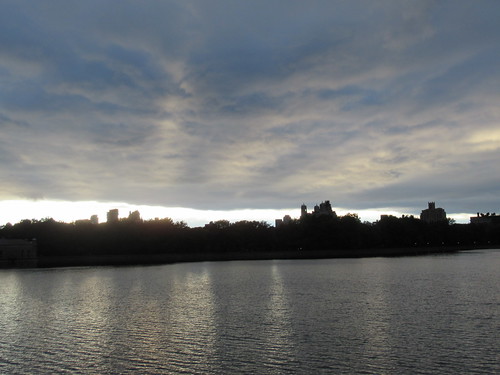
A little earlier, I had walked around some other parts of Central Park, including the Reservoir:

IMG_1787

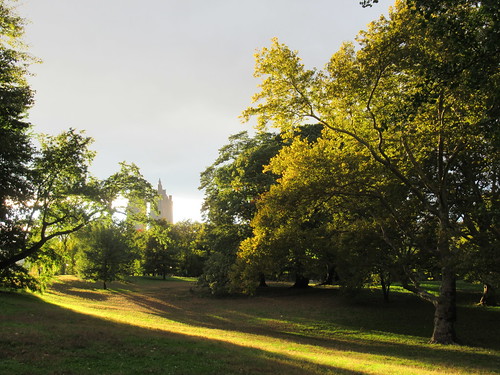
This brilliant glow was in a clearing a little north of the Reservoir:

IMG_1792

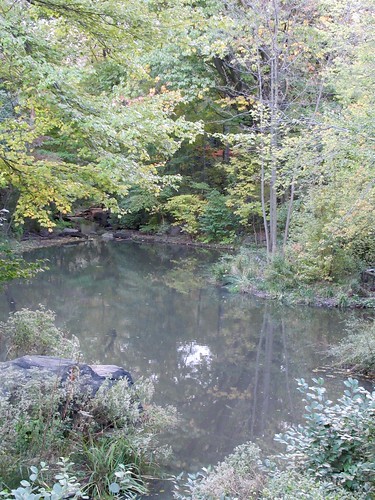
Without meaning to, I detoured to the northwest of the park, where The Pool is especially lovely in autumn:

IMG_1798

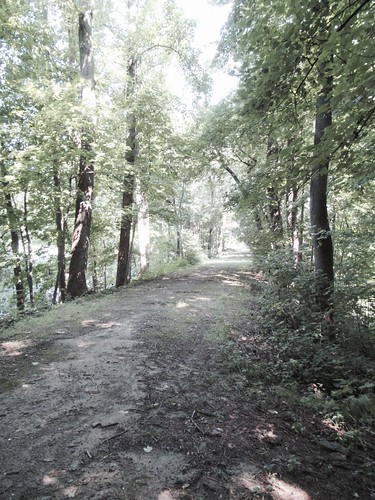
And I crossed east again, to where the Harlem Meer is, through the North Woods:

IMG_1804

Sunday, September 16, 2018

Flirting With Heatstroke: Two Hikes on 90-Degree Days

Drinking a lot of water and using sun protection (hat, sunscreen, long light sleeves) made these hikes bearable. So did the fact that we stuck as much as possible to shade and enjoyed a leisurely lunch break among trees. Still, I'd never hiked in such weather, and I found the most difficult part was the air. It's more difficult to breathe and sometimes felt like inhaling cotton.

That said, I'm glad I went on these two hikes: one outside of NYC, and the other entirely in it. Both of them with Shorewalkers.

Ossining and New Croton Dam Loop


This hike, which was roughly 13 miles, started and ended at the Metro North station for Ossining, NY and included a visit to the New Croton Dam. Much of the hike was on the Old Croton Aqueduct Trail.

IMG_1663

Where we spotted deer at one point.

IMG_1664

Monday, July 2, 2018

New York City Sites for the Fourth of July (All Five Boroughs)

If you're visiting New York City around the Fourth of July (or want to go armchair traveling), and you're interested in American history, this is the post for you. These sites are either connected to the American Revolution or show something of NYC's colonial period.

This list is limited to sites I have visited (so you won't see a photo from the Prison Ship Martyrs Monument in Fort Greene, for instance). For each site, I also mention other neighborhood attractions. Enjoy!

The Bronx


Stockbridge Indian Memorial (Van Cortlandt Park)

IMG_0418

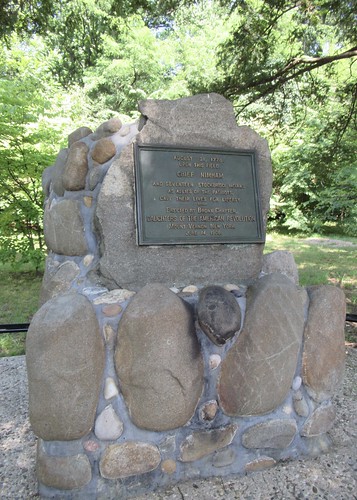
You'll find this memorial in the northeast part of Van Cortlandt Park. It's a tribute to a group of Native Americans, allied with the colonists, who died in August 1778 in a clash with an overwhelmingly larger number of British and Hessian troops. (Here's an article that goes into greater depth about the Stockbridge-Mohican community.)

In the neighborhood: Van Cortlandt Park is massive (one of the city's largest parks) and has golf courses, sports fields, and miles of hiking trails. The Van Cortlandt House Museum on the west side of the park dates from the 18th century, and during the Revolutionary War, both Washington and General William Howe, the commander of the British troops, made use of it. If you're in the area, you can also visit Woodlawn Cemetery, where a variety of historic figures are buried. The cemetery is close to the east side of the park.

Monday, May 28, 2018

Some thoughts on Home by Toni Morrison

In this Toni Morrison novel, two siblings leave their backwoods Georgia home, get even more scarred out in the world, and come back to find that home is a more complicated place than they’d ever thought. Not as stifling as in their childhood, and offering possibilities for rebuilding their lives.

The novel is set in the 1950s, and one of the siblings, Frank, has returned to the U.S. from the Korean War. He brings with him post-traumatic stress and memories that make it difficult for him to live with himself. He’s also black, and needs to transition from a recently desegregated army back to a society where segregation is still the norm, through official enforcement in some places and unofficial enforcement in others.

Meanwhile, his younger sister, Cee (nickname for Ycidra), flees her hateful grandmother by running off to Atlanta with a man who dumps her. Her search for better paying work brings her to the home of an unscrupulous doctor who hires her as his assistant and conducts unethical medical experiments on her and others.

It’s relatively rare to see novels featuring Korean War vets (and black vets, more generally). During the war, Frank has seen and done things that he can’t come back from. (“Back was the free-floating rage, the self-loathing disguised as somebody else’s fault.”) He has discovered things about himself that he would never have guessed at and that he doesn’t know how to confront.

The novel explores the question of what a home truly is. The characters lead precarious lives, and they could be driven out of their homes all too easily. So how does someone create a home when violence, destruction, illness, and complete destitution are nipping at the borders and can spill in at any moment?

Home is not simply a place, it’s a set of relationships and connections, and deep impressions on the mind and heart. The characters have perpetrated or witnessed profound violations in the world. Home is a place where you’re not degraded and where you ought to be free of those violations. At home, you can confront the demons and have people stand beside you.

Cee gains new strength with the help of women who stand in for the lack of a mother figure in her life. Chief among them is Ethel Fordham, who tells her, “Somewhere inside you is that free person I’m talking about. Locate her and let her do some good in the world.”

So home is where you can heal, among people who find worth in you, and it’s where you can do worthy things, even in the face of harsh odds. Of Ethel’s garden:
Her garden was not Eden; it was so much more than that. For her the whole predatory world threatened her garden, competing with its nourishment, its beauty, its benefits, and its demands. And she loved it.
Morrison doesn’t sentimentalize home or make the folks of this backwoods town charming and endearingly simple. Other authors might have gone down that path and trivialized the story and the struggle of these scarred characters.

Tuesday, March 6, 2018

Week in Seven Words #389

alliance
Washington and Lafayette clasp hands, their differences in age and height smoothed over by the sculptor and by the shadows of the overhanging branches.

feelers
Throughout the conversation, she keeps pointing out how she and her husband agree on everything. "He and I never discussed this issue before, and look, we think the same!" She infuses her voice with hope. Her husband says nothing, keeps eating.

impish
Each grotesque appears to have its own story and store of sly remarks. Each gives the impression that he's only pretending to be a sculpture; as soon as you leave, he'll scamper around on the window ledges. Some look drunk. Others are spies and thieves who will sneak inside when they're sure the building is empty.

incongruous
He's come up to hike alongside me when I notice the quote on his t-shirt: "I would prefer not to." From Bartleby the Scrivener. I ask, but with a smile he prefers not to tell me why he chose this shirt on a day of vigorous movement.

patter
As I talk, I watch my words slide off them. I'm a gentle rain shower passing through their evening.

profusion
By the side of the church, the pink and white flowers look like the lining for a baby's crib. Before a brownstone, buttery flowers melt open in the sun. Others spring, pink and broad, from a ceramic planter. Leaves cascade from an open window - a houseplant bent on escape.

resort
By day, the bird bath is for the birds, usually no more than two at a time, each shivering and luxuriating in the water. At night when the birds are gone, a cockroach perches on the edge of the bowl, its antennae fanning.

Tuesday, July 4, 2017

Eight stories of Americans making journeys

Title: Going After Cacciato
Author: Tim O’Brien
Where I Read It: Breaking Into Print

A soldier stationed in Vietnam decides to walk to France. Other members of his squad try to stop him. Cacciato has a reputation for being dim-witted (a "rockhead," he's called), and his idea is absurd, but at the same time it doesn't seem all that crazy to try to get away, no matter how. The way they've been living so far, with comrades dying in gruesome ways and days full of pointlessness and ugly nonsense, it doesn't seem that crazy for someone to want to walk off into the distance. But that would be desertion, and the rest of them can't let him do that, can they?

O'Brien later developed this story into a novel, which I haven't read, but already in this story he fleshes out distinct characters - some petty and eager to kill, others more sympathetic and thoughtful.

Title: The Halfway Diner
Author: John Sayles
Where I Read It: American Voices

A group of women makes a round-trip by bus each Sunday to visit their men at a state penitentiary. The diner is the halfway point on the trip.

The bus is their world in this story. The women break into different groups, sometimes forming friendships, but what happens in the prison may affect their own relationships. To what extent will they take up the battles between their men and reenact it among themselves? The story unfolds through the eyes of one of the Latinas - who has a well-written voice - and I love how the inside of that bus becomes an entire world, and so does the dismal diner. Sayles also has a gift for writing female characters as realistic people, instead of walking bundles of cliches (the same holds true in what I've watched of his movies so far - Passion Fish and The Secret of Roan Inish).

Sunday, January 22, 2017

Two Winter Walks in NYC

One on New Year's Day, the other on Martin Luther King Jr. Day. They covered different neighborhoods in Northern Manhattan, including Inwood and Harlem.

Walking from the George Washington Bridge bus station to Fort Tryon Park takes you through some beautiful residential neighborhoods in Washington Heights. These apartments aren't far from Bennett Park, which is the highest bit of land in Manhattan (just a little over 265 feet above sea level). Like other places in Washington Heights, it's a site of Revolutionary War military action (mostly Washington resisting but ultimately retreating from British forces, as they pushed him out of Manhattan).

P1080874

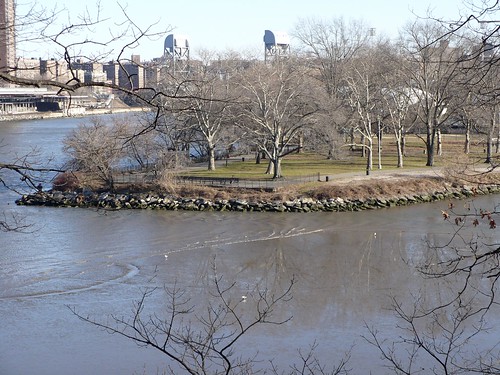
From Inwood Hill Park at the northern tip of Manhattan, a view of Spuyten Duyvil Creek, and beyond it, Marble Hill and the Bronx:

P1080902

Friday, October 21, 2016

Week in Seven Words #309

battleship
They're all in flames except for the destroyers. He hunts for mine, and I for his, across the war-torn grids.

exactitude
He's assigned an essay on the Battle of Gettysburg, and chooses to write it the length of the Gettysburg Address, 272 words. It reads naturally, without too many adjectives thrown in for padding.

insinuated
The cold rain has crawled into my socks.

nonconfrontational
We play to 100 points. As soon as we're both close, he lies on the floor, hands flailing, so that if I win, he can say that he let me.

prickles
The harpsichord music is fury and frayed nerves. Forked lightning kept in a crystal vial.

rote
For the sake of inefficiency, they invite us to an in-person orientation. We spend fifteen minutes signing in, finding our seats, and picking up a thin packet of information we could have received via email. Following a ten-minute PowerPoint presentation chock-full of information already contained in the packets, the Q&A session begins. Crickets chirp. We leave.

tenderness
Cuddling on the couch, because it can't already be time to say good night.

Monday, May 30, 2016

A bit of American Civil War History: Prentiss Brothers

A few weeks ago, I visited Green-Wood Cemetery in Brooklyn. It's a National Historic Landmark, and various well-known people are buried there, including Samuel Morse, Elias Howe, and Leonard Bernstein. And Boss Tweed, who is one of the city's most famous corrupt politicians.

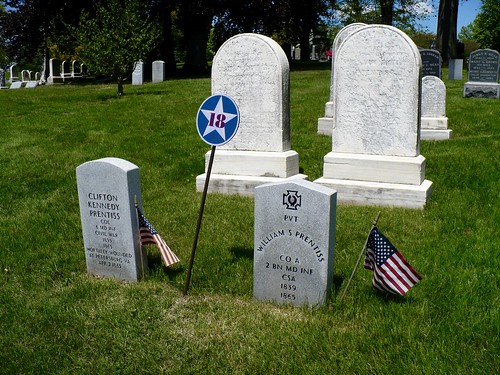
There are also thousands of Civil War veterans buried at Green-Wood. Among them are two brothers from Maryland, Clifton and William Prentiss.

P1080380

They fought on opposite sides of the war, Clifton for the Union and William for the Confederacy. Both died of injuries sustained at the Battle of Petersburg. Their nurse at Washington's Armory Square Hospital was Walt Whitman. And I didn't realize it until a few minutes ago, but he wrote about them in Specimen Days: Two Brothers, One South, One North.

Tuesday, September 8, 2015

The Sheer Prettiness of Provincetown

I recently visited Boston for a few days and made a day trip to Provincetown with a ferry (the Boston Harbor Cruises one). I'd never been to Provincetown (or any other part of Cape Cod), and it was a treat. Even the parts of town that were most blatantly a tourist trap were still lovely.

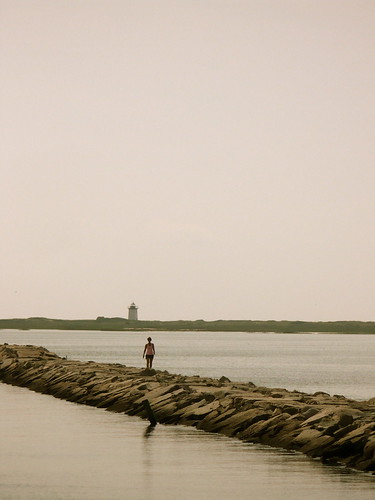
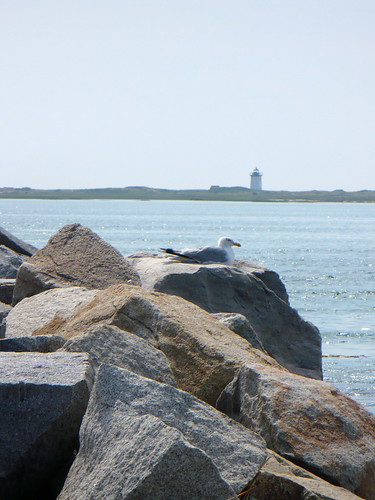
I stuck to Commercial Street, first walking all the way west to where it begins near the spot where the Pilgrims first landed in the 1600s (it wasn't at Plymouth, but Provincetown - they moved on to Plymouth a little later). At the spot historians determined is likely the one where they made their stop, there's a plaque and a small park (Pilgrims' First Landing Park). Off the park, a small beach and a jetty made of large rocks.

P1070740

I walked out onto the jetty for a while. I loved listening to the water rushing under the rocks (where I also found some smashed shells, probably from sea gulls dropping them on the rocks to get at the meat inside).

P1070766

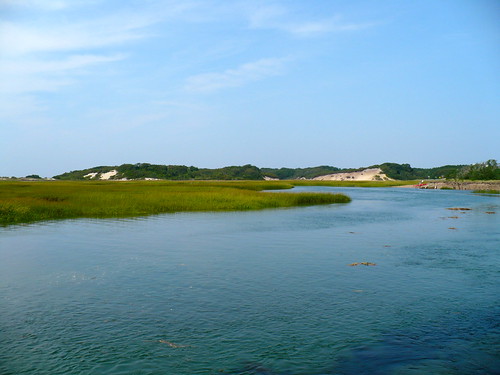
And I loved the smell of the salt marsh all around.

P1070754

Thursday, May 28, 2015

Hike in Inwood Hill Park, Walk Down Riverside Drive

At the end of April, I went on a ranger-led hike of Inwood Hill Park at the north tip of Manhattan, then walked down along the island's west side. The title of the post is a little misleading, because not all of it was on Riverside Drive, but I did cover a long stretch of Riverside Drive too.

The outskirts of Inwood Hill Park look like a typical city park, very pretty in the spring.

P1070337

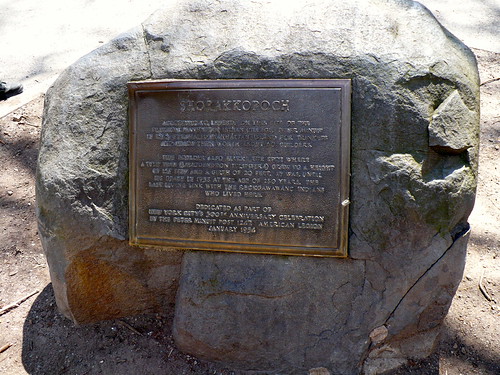
Further in, you start getting some more of the local history. Like, here is what some people believe is the exact spot where the Dutch purchased Manhattan for a paltry sum.

P1070340

As discussed by the ranger, the Dutch and the Native Americans appeared to have different ideas of what the transaction meant (there's an interesting discussion of it here).

The spot, marked by a boulder called Shorakkopoch Rock, used to be the site of a massive, centuries-old tulip tree that was eventually cut down.

Nearby, there are still other tulip trees soaring up.

P1070342_2

Wednesday, October 15, 2014

Salem, Massachusetts in October: 25 Photos

(From a half-day visit on Columbus Day.)

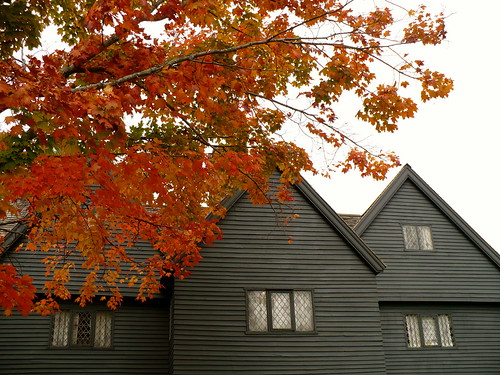
The Witch House

P1060547
(It's the home of Jonathan Corwin, one of the judges involved in the Salem witch trials of the late 1600s.)

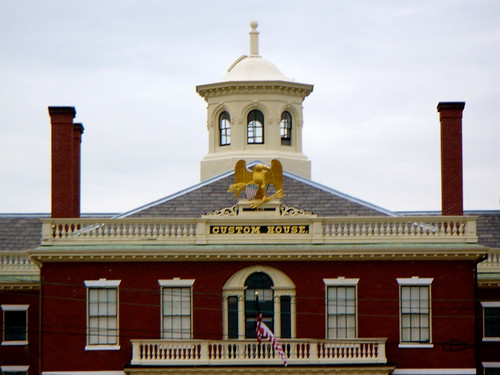
The Custom House

P1060613
(At the Salem Maritime National Historic Park.)

Ropes Mansion Garden

P1060540
(This garden is in back of a home dating to the early 1700s.)

Wednesday, October 8, 2014

Week in Seven Words #228 & 229

228

gazers
Three teenagers are sitting on a bench, arms around each other, looking for the moon in a daytime sky.

heightened
The silence on the path isn't true silence. The trees are bristling, and animals are scraping unseen against dirt. My feet are crunching on loose rock. The silence is the absence of human voice.

platitudinous
People who tell me to "be myself" often mean "be a self that I approve of and am comfortable with."

punctuating
When I read beneath the green branches, bugs fall onto my book like extra punctuation.

subterrestrial
In part because it's dwarfed by a flag pole, one gets the sense that the old stone building, crouched on the ground, has a small room in it with a door, and that this door opens to a flight of stairs that takes you miles below the city.

sweeping
Wedding photos in the park - the bride's train sweeping over fallen green leaves.

witchery
The shop, dark as a cavern, smells of soap and herbs.

Tuesday, July 22, 2014

Visiting Brooklyn Heights and DUMBO

This past Sunday had ideal summer walking weather. For the most part, it wasn't too hot out; not too unrelentingly sunny. Lots of cool breezes. A great day to be outdoors. Granted, part of my trip to Brooklyn Heights was an indoor historical lecture/tour, a really good one, but after that I walked along the beautiful waterfront.

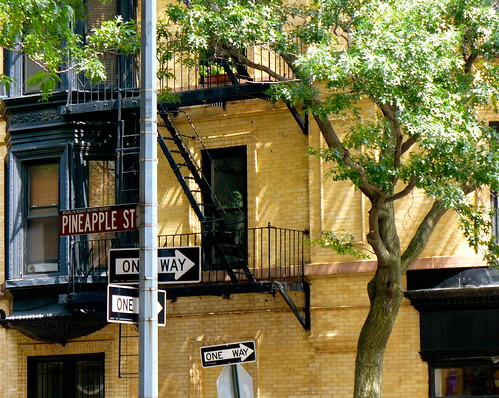
The visit began at the Clark Street subway stop in Brooklyn Heights. One of the first things I noticed is that a few of the streets have fruit names, apparently because lots of fruit used to be delivered to warehouses here. Here is Pineapple Street, with buildings of a suitable color.

P1060416

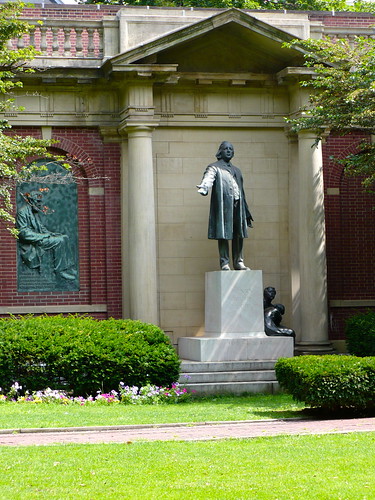
A little bit north of that, between Orange and Cranberry Streets, was where the history lesson began. This was at Plymouth Church, where the famous 19th century abolitionist preacher, Henry Ward Beecher, used to take to the pulpit to speak out against slavery.

P1060420

That's his statue, and to the left of him, an engraving of Lincoln, who prayed a couple of times at the church. In addition to serving as a platform for abolitionist preaching, the church was also a station on the Underground Railroad, the series of homes and other potential hiding spots that runaway slaves used to escape north.

Even in NY they weren't safe. Although slavery was abolished in NY state by 1827 and other northern states had also struck down slavery, southern slaveowners still had a claim to the escaped slaves. Northerners were obligated by law to hand them back over or risk getting fine or going to jail. There were also bounty hunters or slave catchers who actively pursued escaped slaves (and sometimes, if they didn't find who they were looking for, would capture a freeborn person who fit the description more or less). Runaway slaves generally tried to make it to Canada.

Friday, June 13, 2014

Walking in Washington Heights

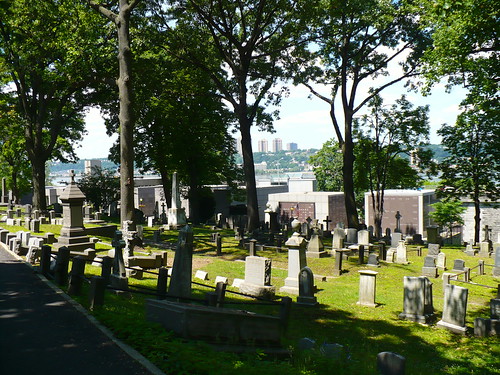
Tourist maps of NYC that I've come across often don't include Northern Manhattan (starting from around Harlem and north of that). And yet, there are many gems in this part of the city. Last Sunday, with a group that organizes all kinds of walks in and around the city, I visited some places in the Washington Heights neighborhood that I hadn't known about or looked into before, even though I'd been to the Heights many times.

P1060208

P1060248

P1060304

The first stop was the Trinity Church Cemetery of Upper Manhattan, which is associated with Trinity Church on Wall Street in Lower Manhattan. In the mid-1800s, Trinity Church ran out of room to bury people in Lower Manhattan, so this Washington Heights cemetery became an extension.

P1060219

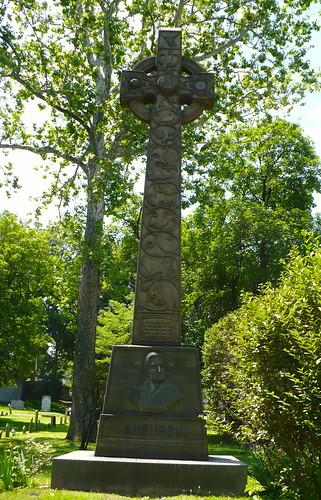
Among the people interred there are Ralph Ellison (Invisible Man author), Clement Clarke Moore (who wrote "Twas the Night Before Christmas"), Jerry Orbach (Law & Order just wasn't the same without him), Alfred Tennyson Dickens (one of Charles Dickens' sons, who died in NYC's Astor Hotel while participating as guest of honor in the Dickens Centennial), and John James Audubon, whose tombstone unsurprisingly features different kinds of birds.

P1060238

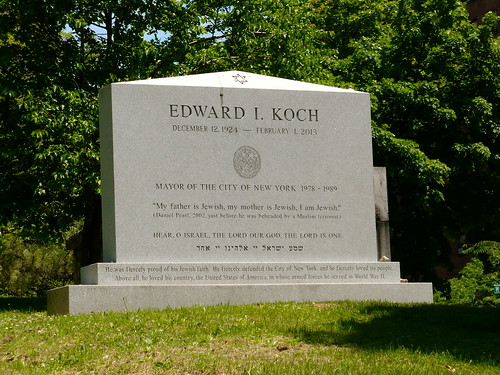
Former NYC mayor Ed Koch, who didn't want to leave Manhattan after death, also secured a burial spot here; the cemetery is non-denominational and the only active one in Manhattan (though at this point, people can arrange to get interred only above ground in a mausoleum). Koch is buried near an entrance to the cemetery grounds called the Jewish Gate.

P1060245

The stone has a verse of the Shema Prayer inscribed on it, "Shema Yisrael," which is of huge significance to Jews; even those who aren't particularly observant often know these words and recite them.

Also, Koch chose to inscribe the final words of journalist Daniel Pearl on the tombstone. It surprised me when I first saw it. Part of what it conveys to me is that Koch saw his Jewishness as central to who he was not only in times of peace but also in times of war and persecution (for instance, he had served as an infantryman in Europe during World War II). He had specified what he wanted on his tombstone before his death, and interestingly, he wound up dying exactly 11 years after Pearl - on the same date (February 1st).

Prior to seeing his tombstone, one of the people in the group jokingly wondered if it would have his slogan, "How'm I doin'?" inscribed on it.

Friday, August 9, 2013

Nonfiction Book of the Month: A Lady's Life in the Rocky Mountains

Cover image for A Lady's Life in the Rocky Mountains

Isabella Bird was an Englishwoman who traveled to remote corners of the world in the second half of the 19th century; she became the first female member of the Royal Geographical Society and wrote extensively about her travels. Unusually, she traveled alone, and in A Lady's Life in the Rocky Mountains, she gives vivid and frank descriptions of life in the Rocky Mountains when they were first being settled; she visited there when she was in her forties.

She roughed it, sleeping in the homes of settlers, in dilapidated cabins, and sometimes outdoors; wherever she went, she worked alongside her hosts, assisting them with their chores. She was an accomplished horsewoman, braving bad weather and spotty trails on horseback, and at several points helping people round up cattle; most of the time she didn't ride sidesaddle, but seated herself as a man would. She wound up befriending a desperado, "Mountain" Jim Nugent, who helped her ascend Long's Peak. All of her writing renders the natural world beautifully, but even when she's in raptures over a particular location (such as Estes Park), there's always a steadiness to her work; you could tell she had sharp eyes and a good head on her shoulders. She comes across a variety of people in the Rockies and on the bordering Plains, and makes an unsentimental analysis of settler society, both the favorable and unfavorable qualities of it.

The book - a compilation of letters she wrote from the Rockies to her sister back in England - is a treat, for its literary and historical value. So dive in and travel alongside her:

There were snow patches, snow slashes, snow abysses, snow forlorn and soiled looking, snow pure and dazzling, snow glistening above the purple robe of pine worn by all the mountains; while away to the east, in limitless breadth, stretched the green-grey of the endless Plains.

Monday, March 25, 2013

Nonfiction Book of the Month: Women's Letters

Title: Women's Letters: America from the Revolutionary War to the Present
Editors: Lisa Grunwald & Stephen J. Adler

I'm thinking of starting a monthly feature where I highlight a good nonfiction book I've read. Because March is Women's History Month, this is my selection for the month.

The cover for Women's Letters: America from the Revolutionary War to the Present

I read this one cover to cover, though it's also possible to skip around the book and sample different letters. A number of these American letter writers are famous (e.g. Abigail Adams, Emily Dickinson, Clara Barton, Julia Child), while others are obscure, though not less interesting.

The topics are enormous in range. You'll see arguments on multiple sides of important political and moral issues in the U.S., including slavery, the persecution of Native Americans, major wars, the suffragist movement, civil rights, and birth control and abortion.

The women here write about love, sex, academics, travel, religion, pregnancy, their jobs inside and out of the home, fashion, family issues, illness, and death.

Some of them served in the military (including a military nurse with multiple battle stars giving an account of treating concentration camp survivors at the end of WW2). Others never seemed to have ventured out of their home state. Some of the writers were slaves or former slaves (including women who didn't know how to read or write, dictating their letters). Within pages of each other, one woman describes a party game involving poetry and another describes undergoing a mastectomy without any anesthetics. You don't know for sure what you'll come across as you turn to a given page.

For each letter, the editors have provided some historical and biographical background, so you can get a sense of the letter's context.