absolution
They love talking about actions having consequences, until it comes to something they've done. Then, good intentions are all that matter.
absorbers
She writes a tribute to her friends, the three closest, who cluster around her when shockwaves spread through her life.
coagulation
The greatest gift her parents gave her, she writes, is a love of cheese. Cheese platters and wine are what hold her family together at home and abroad.
guesswork
We play charades. I act out a kangaroo. "Karate bunny!" she shouts. I try again.
moth
The boy runs straight at the headlights. He cries when his parents snatch him away.
rebounds
The basketball flies around like Flubber in the cluttered room.
unused
Dark windows and deserted streets tell me stories I don't know how to interpret. Some neighborhoods wither like unwatered vines, and it isn't always clear why.
Sunday, November 27, 2016
Wednesday, November 23, 2016
Six movies that fit the holiday season
Title: Home for the Holidays (1995)
Director: Jodie Foster
Language: English
Rating: PG-13

In spite of its premise - woman visits her bonkers family for Thanksgiving - the movie isn't a standard, sitcom-like holiday comedy. The main character, Claudia (Holly Hunter), reconnects with some of her family, runs up against resentment and anger, and falls in love with her brother's guest, Leo (Dylan McDermott) - but these developments don't feel contrived. The actors inhabit the movie naturally, as if they aren't putting on a performance.
I like the exploration of the family, the ways in which they're close or have fractured. Claudia and her brother, Tommy (Robert Downey Jr.), cling to each other as the unconventional children, while their sister, Joanne (Cynthia Stevenson), is perpetually on the outside and profoundly unhappy; she's married, has two kids, helps her aging parents, and so one would think she'd be comfortably settled at the heart of her family, but she seethes with stress and joylessness, pushing people away while also living with unnamed betrayals (including self-betrayal).
Among the older actors, like Anne Bancroft and Geraldine Chaplin, there are also strong performances, especially Chaplin's heartbreaking, eccentric character, also a family outsider. The filmmakers don't let the movie get melodramatic, though. There's restraint to the anger and pain, and there's plenty of light-heartedness and some moments that made me laugh. Though Claudia's life is in a bit of an upheaval, she has good things going for her; she's smart and fierce, and has a close relationship with her teenaged daughter, Kitt (Claire Danes). Not all is right in the world, but there's enough that's good.
Title: I Remember Mama (1948)
Director: George Stevens
Language: English and some Norwegian
Rating: Unrated
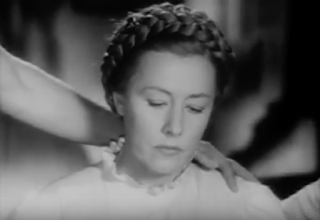
The movie centers on the matriarch of a Norwegian immigrant family living in San Francisco in the early 20th century. She's played by Irene Dunne as practical, devoted, steadfast, and sharp, her influence present in everyone's lives - such as when her older daughter, Katrin (Barbara Bel Geddes), has dreams of becoming a writer.
I Remember Mama is warm but not cloying. It's spiced with enough humor and character complexity to keep it from becoming too sentimental.
Director: Jodie Foster
Language: English
Rating: PG-13

In spite of its premise - woman visits her bonkers family for Thanksgiving - the movie isn't a standard, sitcom-like holiday comedy. The main character, Claudia (Holly Hunter), reconnects with some of her family, runs up against resentment and anger, and falls in love with her brother's guest, Leo (Dylan McDermott) - but these developments don't feel contrived. The actors inhabit the movie naturally, as if they aren't putting on a performance.
I like the exploration of the family, the ways in which they're close or have fractured. Claudia and her brother, Tommy (Robert Downey Jr.), cling to each other as the unconventional children, while their sister, Joanne (Cynthia Stevenson), is perpetually on the outside and profoundly unhappy; she's married, has two kids, helps her aging parents, and so one would think she'd be comfortably settled at the heart of her family, but she seethes with stress and joylessness, pushing people away while also living with unnamed betrayals (including self-betrayal).
Among the older actors, like Anne Bancroft and Geraldine Chaplin, there are also strong performances, especially Chaplin's heartbreaking, eccentric character, also a family outsider. The filmmakers don't let the movie get melodramatic, though. There's restraint to the anger and pain, and there's plenty of light-heartedness and some moments that made me laugh. Though Claudia's life is in a bit of an upheaval, she has good things going for her; she's smart and fierce, and has a close relationship with her teenaged daughter, Kitt (Claire Danes). Not all is right in the world, but there's enough that's good.
Title: I Remember Mama (1948)
Director: George Stevens
Language: English and some Norwegian
Rating: Unrated

The movie centers on the matriarch of a Norwegian immigrant family living in San Francisco in the early 20th century. She's played by Irene Dunne as practical, devoted, steadfast, and sharp, her influence present in everyone's lives - such as when her older daughter, Katrin (Barbara Bel Geddes), has dreams of becoming a writer.
I Remember Mama is warm but not cloying. It's spiced with enough humor and character complexity to keep it from becoming too sentimental.


Friday, November 18, 2016
Week in Seven Words #313
cyberspace
Catching up on housework while the Internet and phones aren't working. Keep glancing at the router to check if service is back. Resume dish-washing.
fleecy
We're side-by-side on the couch, our legs pressed together beneath a staticky blanket.
mauve
Fairy lights, purple skies, an evening chill.
muffling
We speak through scarves, our voices smothered.
soul
After services in the synagogue, a boy and his father take turns being rabbi and cantor. When it's the boy's turn to be the rabbi, his father asks for a speech or some wise words about the week's Torah portion. "L'Chaim, L'Chaim, L'Chaim!" the boy says.
waterfowl
The quivering gray-brown rocks on the reservoir are ducks.
zippy
Kids run up and down the synagogue aisles. The space for prayers is also one for play.
Catching up on housework while the Internet and phones aren't working. Keep glancing at the router to check if service is back. Resume dish-washing.
fleecy
We're side-by-side on the couch, our legs pressed together beneath a staticky blanket.
mauve
Fairy lights, purple skies, an evening chill.
muffling
We speak through scarves, our voices smothered.
soul
After services in the synagogue, a boy and his father take turns being rabbi and cantor. When it's the boy's turn to be the rabbi, his father asks for a speech or some wise words about the week's Torah portion. "L'Chaim, L'Chaim, L'Chaim!" the boy says.
waterfowl
The quivering gray-brown rocks on the reservoir are ducks.
zippy
Kids run up and down the synagogue aisles. The space for prayers is also one for play.
Tuesday, November 15, 2016
Week in Seven Words #312
brusque
Blunt, cranky, and doesn't care about popular opinion. A pinch of humor in his mouth, lips turned up at the corners.
creepy
For unknown reasons, the restaurant plays a kind of soft, demented circus music. Everything turns sinister: the glint of cutlery, the irregular laughter. The waiter's secretive smile when I order a hamburger.
fabrication
He introduces me to "Two Truths, One Lie," where you share three things about yourself and everyone tries to guess which one is false. The U.S. states I've visited and number of miles I've walked in a day throw people off.
locomotives
For a couple of hours, we're absorbed in building train routes across Europe.
petulance
Unwilling to do something fun, she claims the sofa and calls attention to herself by complaining.
shrugging
When the adults are being childish, take a break from them and sit at the children's table.
understory
He's absorbed in his rain forest of pop-up trees and plastic prowling animals.
Blunt, cranky, and doesn't care about popular opinion. A pinch of humor in his mouth, lips turned up at the corners.
creepy
For unknown reasons, the restaurant plays a kind of soft, demented circus music. Everything turns sinister: the glint of cutlery, the irregular laughter. The waiter's secretive smile when I order a hamburger.
fabrication
He introduces me to "Two Truths, One Lie," where you share three things about yourself and everyone tries to guess which one is false. The U.S. states I've visited and number of miles I've walked in a day throw people off.
locomotives
For a couple of hours, we're absorbed in building train routes across Europe.
petulance
Unwilling to do something fun, she claims the sofa and calls attention to herself by complaining.
shrugging
When the adults are being childish, take a break from them and sit at the children's table.
understory
He's absorbed in his rain forest of pop-up trees and plastic prowling animals.
Monday, October 31, 2016
Week in Seven Words #311
causality
The desk chair that's meant to be sat on, not ridden, breaks. She slides off it with an expression that's part-guilty, part-puzzled. We live in a strange world indeed, where desk chairs just fall apart without warning, she seems to say.
fictive
Watching the Matilda movie from the 1990s, and the only person truly freaking out from Trunchbull is another adult in the room. "Is this... how can this be real? How can she get away with this?" he asks.
lashing
People looking for a purpose and a place find neither, seek someone near them to blame.
likeness
He prefers passive-aggressive insults. Instead of telling me directly what he thinks about my character, mind, and looks, he'll discuss someone I bear a resemblance to and make hostile remarks about the qualities I share with them.
phototropic
In an orange coffee mug, she's growing what looks like a valiant twig. Whatever it is has sprouted a couple of leaves and angled itself towards the window.
scholastically
Pages whirring, books thudding, students sniffling over their assignments.
treasuring
A pink evening glow of laughter and play.
The desk chair that's meant to be sat on, not ridden, breaks. She slides off it with an expression that's part-guilty, part-puzzled. We live in a strange world indeed, where desk chairs just fall apart without warning, she seems to say.
fictive
Watching the Matilda movie from the 1990s, and the only person truly freaking out from Trunchbull is another adult in the room. "Is this... how can this be real? How can she get away with this?" he asks.
lashing
People looking for a purpose and a place find neither, seek someone near them to blame.
likeness
He prefers passive-aggressive insults. Instead of telling me directly what he thinks about my character, mind, and looks, he'll discuss someone I bear a resemblance to and make hostile remarks about the qualities I share with them.
phototropic
In an orange coffee mug, she's growing what looks like a valiant twig. Whatever it is has sprouted a couple of leaves and angled itself towards the window.
scholastically
Pages whirring, books thudding, students sniffling over their assignments.
treasuring
A pink evening glow of laughter and play.
Thursday, October 27, 2016
Two film noirs where hitch-hiking goes horribly wrong
Title: Detour (1945)
Director: Edgar G. Ulmer
Language: English
Rating: Unrated
Detour was made on a shoestring budget, which works for its overall mood. A musician, Al Roberts (Tom Neal), hitch-hikes across the US to get to his fiancée in California. She represents the sort of life that a schlimazel and, ultimately, murderer like him will never enjoy. He's not only unlucky, but wallows in his unluckiness, seems to rush out to meet opportunities that will further make him unlucky. One of the best shots is of his face, full of stubble and despair, as he sits in a diner.
The only time he seems to struggle against his character and fate is when he plays piano. The music feels like a protest against his worst impulses.
Most memorable of all is Vera, a woman Al meets on the road. Ann Savage plays Vera as a wildly creepy sexual hellcat, full of rage and bitterness. Her eyes alone promise torment. She could have been one of the Furies in a Greek tragedy. I like how Savage's performance evokes both a particular woman and vengeance incarnate. Al is almost definitely not the worst man Vera has ever had to deal with, but he's there, in her path, ready to embrace unluckiness.
Title: The Hitch-Hiker (1953)
Director: Ida Lupino
Language: English and some Spanish
Rating: Unrated
Two men on a fishing trip pick up a stranded motorist. He's Emmett Myers (William Talman), a psychotic criminal who has escaped from prison. One of his eyes never fully closes, so even when his victims think he might have fallen asleep (and they can maybe make a break for it), they aren't sure if he's watching them.
The filmmakers maintain strong psychological tension throughout the movie. Roy (Edmond O'Brien) and Gilbert (Frank Lovejoy), the fishing trip buddies, know that at some point Emmett will kill them. They just don't know when. (A fact that he torments them with.) Subtle contrasts emerge between them, in how they react to their likely fate, while struggling to stick together, stay sane, and find an opportunity to fight back.
There's an excellent use of music in this film, including some classical music in a scene out in a desert by a well where a killer may be disposed to drop bodies. There's also light Mexican folk music in a moment where Roy and Gilbert may very well die. The suspense is especially strong during one scene involving a long walk on a dock through shadows.
Part of the movie is set in Baja California, and notably it portrays the locals as people, not as caricatures of another culture. Another impression the movie made on me is how it never gets melodramatic. It just lets the tension stretch out, the feelings churn and from time to time erupt.
Director: Edgar G. Ulmer
Language: English
Rating: Unrated
Detour was made on a shoestring budget, which works for its overall mood. A musician, Al Roberts (Tom Neal), hitch-hikes across the US to get to his fiancée in California. She represents the sort of life that a schlimazel and, ultimately, murderer like him will never enjoy. He's not only unlucky, but wallows in his unluckiness, seems to rush out to meet opportunities that will further make him unlucky. One of the best shots is of his face, full of stubble and despair, as he sits in a diner.
The only time he seems to struggle against his character and fate is when he plays piano. The music feels like a protest against his worst impulses.
Most memorable of all is Vera, a woman Al meets on the road. Ann Savage plays Vera as a wildly creepy sexual hellcat, full of rage and bitterness. Her eyes alone promise torment. She could have been one of the Furies in a Greek tragedy. I like how Savage's performance evokes both a particular woman and vengeance incarnate. Al is almost definitely not the worst man Vera has ever had to deal with, but he's there, in her path, ready to embrace unluckiness.
Title: The Hitch-Hiker (1953)
Director: Ida Lupino
Language: English and some Spanish
Rating: Unrated
Two men on a fishing trip pick up a stranded motorist. He's Emmett Myers (William Talman), a psychotic criminal who has escaped from prison. One of his eyes never fully closes, so even when his victims think he might have fallen asleep (and they can maybe make a break for it), they aren't sure if he's watching them.
The filmmakers maintain strong psychological tension throughout the movie. Roy (Edmond O'Brien) and Gilbert (Frank Lovejoy), the fishing trip buddies, know that at some point Emmett will kill them. They just don't know when. (A fact that he torments them with.) Subtle contrasts emerge between them, in how they react to their likely fate, while struggling to stick together, stay sane, and find an opportunity to fight back.
There's an excellent use of music in this film, including some classical music in a scene out in a desert by a well where a killer may be disposed to drop bodies. There's also light Mexican folk music in a moment where Roy and Gilbert may very well die. The suspense is especially strong during one scene involving a long walk on a dock through shadows.
Part of the movie is set in Baja California, and notably it portrays the locals as people, not as caricatures of another culture. Another impression the movie made on me is how it never gets melodramatic. It just lets the tension stretch out, the feelings churn and from time to time erupt.
Week in Seven Words #310
carving
The wind slashes at us all the way up the hill.
enfolding
She lingers in her daydream. Its air smells like a bakery, and its streets are cobblestone. Roses burst from a breach in the wooden fence around her Queen Anne house.
patchiness
Sidewalks held together with cement, gum, and mashed litter.
restless
It's a rumbly night with noises from parts unknown.
rosiness
Receive an email from her. Attached, a selfie with our faces wreathed in hearts.
run-of-the-mill
A movie stitched together from nostalgic moments, explosions, and characters who arrive with pre-packaged, top-level abilities. Dressed conveniently in white for good, black for bad.
ungrammatically
An academic article, written as if each sentence was held to a fire and partially melted.
The wind slashes at us all the way up the hill.
enfolding
She lingers in her daydream. Its air smells like a bakery, and its streets are cobblestone. Roses burst from a breach in the wooden fence around her Queen Anne house.
patchiness
Sidewalks held together with cement, gum, and mashed litter.
restless
It's a rumbly night with noises from parts unknown.
rosiness
Receive an email from her. Attached, a selfie with our faces wreathed in hearts.
run-of-the-mill
A movie stitched together from nostalgic moments, explosions, and characters who arrive with pre-packaged, top-level abilities. Dressed conveniently in white for good, black for bad.
ungrammatically
An academic article, written as if each sentence was held to a fire and partially melted.
Subscribe to:
Posts (Atom)